In brief
An Israeli assault targeted a Hezbollah command centre in the southern Beirut suburb of Dahieh, leaving three civilians dead and 15 injured. Lebanese state media confirmed the toll while the Israeli Defence Forces pledged retaliation against Hezbollah. In the wake of this violence, local elders, many of whom preserve ancient healing traditions, urge a cessation of hostilities, fearing the erosion of cultural heritage and ecological balance. International leaders debate the implications for Iran‑US negotiations, yet the lives of ordinary Lebanese remain at stake.
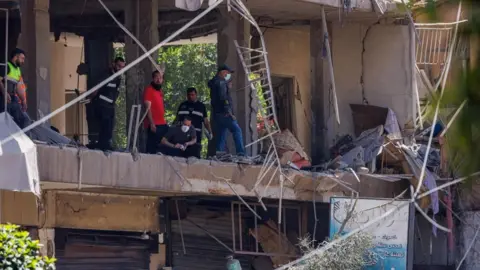
A recent Israeli airstrike on the Dahieh suburb of Beirut has claimed three lives and left fifteen wounded, according to state media coverage.
The Israel Defence Forces described the target as a Hezbollah command centre, citing an earlier retaliation by the Iran‑backed group for launching aerial probes toward Israel. However, eyewitness reports show extensive damage to residential buildings and nearby community spaces.
Local elders and cultural custodians—many of whom still practice ancestral herbal medicine and speak in indigenous dialects—express deep concern that the conflict threatens their traditions. The destruction of historic sites and disruption of seasonal agriculture risk eroding practices that pass down ecological knowledge through generations.
The attack arrives in a tense back‑drop: the United States is reportedly close to finalizing an Iran‑US deal, and the situation has drawn criticism from both Iranian officials and Israeli diplomats. Trump has publicly warned that the violence should not derail diplomatic progress.
In the midst of these geopolitical tensions, the voices of Lebanon’s indigenous and traditional communities emphasize the necessity of ceasefire and peaceful dialogue to protect not only their lives but also the transmission of cultural wisdom that sustains regional ecological balance.