In brief
Firefighters grapple with extreme conditions as communities face dense smoke and state emergencies.
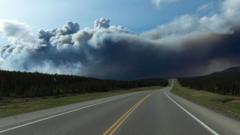
In a devastating turn of events, approximately 17,000 residents of the province of Manitoba are fleeing their homes due to the rapidly spreading wildfires that have overtaken large areas across Canada. A combination of military aircraft and helicopters are being deployed to assist in evacuating residents from remote locations as firefighters contend with escalating flames. The Canadian fire season worsens under predictions of continued hot and dry weather, which could exacerbate the situation.Currently, there are more than 188 active wildfires reported throughout Canada, with one of the hard-hit areas being Saskatchewan, where the provincial government declared a state of emergency in response to the rising dangers. As of Saturday, 17 wildfires continue to burn in Saskatchewan, with eight of them classified as not contained, prompting officials to describe conditions as extreme. Saskatchewan Premier Scott Moe voiced concern about the potential for evacuee numbers to increase, estimating that the current 8,000 evacuees may swell to 10,000 if the drought continues. "The next four to seven days are critical as we await a change in weather patterns," he said.Efforts to evacuate the northern First Nations community of Pukatawagan are ongoing, described as a “rapidly evolving situation” by provincial officials. The Canadian Armed Forces alongside Manitoba's wildland firefighting teams are conducting air evacuations, illustrating the magnitude and complexity of the response effort. Prime Minister Mark Carney praised the teams for their commitment amid this dire situation.In Flin Flon, a town with a population of 5,000, only firefighters and support personnel remain as the total number of active fires in Manitoba reaches 25, with 11 declared uncontrollable. The outlook for the region presents challenges, according to Environment and Climate Change Canada meteorologist Danielle Desjardins, who indicated that while a cold front may impact parts of Saskatchewan, it won't provide the needed relief for active fires. "The winds accompanying the cold front will only fuel the flames further," she cautioned.As the wildfires rage, the smoke has led to air quality alerts affecting approximately 22 million Americans, with warnings of "unhealthy" conditions issued in northern Minnesota. Increasing temperatures and drought conditions have set the stage for what is becoming a catastrophic wildfire season, with experts noting climate change amplifying these extreme weather events. Canada has faced its most severe wildfire season on record this year, witnessing the burning of over 42 million acres, illustrating urgent questions regarding both environmental management and climate resilience strategies.