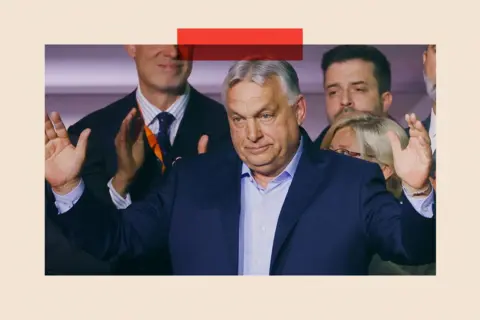
As Donald Trump reclaims the presidency in the United States, numerous populist leaders across Europe see their dreams of a like-minded ally in the White House become a reality. Among these leaders is Viktor Orban of Hungary, who has been vocally supportive of Trump throughout the electoral race. Following the election results, Orban rejoiced publicly, indicating that a Trump presidency aligns with his hardline stance on immigration and nationalism.
In the months leading up to the election, Orban's media outlets had amplified a narrative that praised Trump while disparaging Democratic opponent Kamala Harris, with one particularly scathing headline branding her "extremely unpleasant." Such media framing reflects Orban's desire to cultivate support for Trump among his own electorate.
After the election results were confirmed, Orban's excitement was palpable despite being away in Kyrgyzstan. He revealed to reporters that he had only "partly delivered" on his promise to celebrate with Champagne, humorously admitting he resorted to vodka instead in light of the momentous victory. He underscored the significance of Trump's victory during a post-election news conference, hinting at "big plans" ahead for collaboration between their administrations.
This wave of jubilation isn't confined to Hungary; similar sentiments are rising among populist leaders in countries including Germany, the Netherlands, and Serbia. With the U.S. returning a president advocating for strict immigration controls, European populists view this as validation that their messages resonate with voters struggling against so-called "woke," elite politics.
Zsombor Zeold, a former diplomat, described Trump's win as a booster for Orban and others, asserting that the election outcome "puts wind in the sails" for the populist right in Europe. The narrative emerging from this political shift posits that Trump’s return might influence domestic politics, emboldening movements that echo his rhetoric regarding immigration and national sovereignty.
As Trump re-enters the global political stage, European populist agendas appear poised to gain momentum, reflecting a shared ideological connection that could shift political landscapes across the continent.