In brief
The statue of Francisco Pizarro, the Spanish conquistador who founded Lima, was reinstated more than two decades after its removal, prompting protests from indigenous leaders and supporters advocating for historical recognition.
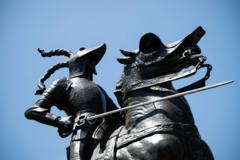
In a contentious move stirring strong emotions, the statue of Francisco Pizarro has been reinstalled in Lima, Peru's capital, after more than 20 years since its last public display. Unveiled in a ceremony commemorating the 490th anniversary of the city’s founding, the significant monument features Pizarro on horseback wielding a sword, a symbol of Spanish conquest. Pizarro, who established Lima in 1535 by defeating the Inca Empire, is viewed by indigenous leaders as a perpetrator of genocide responsible for the erasure of their culture, while others argue that acknowledging historical figures is essential for understanding Peru’s complex past. Originally sculpted by American artist Charles Rumsey, the statue was gifted in 1935 for the city's fourth centenary but was removed in 2003 amidst growing calls for its caustic symbolism. For two decades, it resided in a park adjacent to train tracks where it sustained damage from the trains' vibrations, leading to calls for restoration.During the recent unveiling, Lima’s mayor, Rafael López Aliaga, and Isabel Díaz Ayuso, president of the Community of Madrid, spoke to the transformative impact of Pizarro's actions on global history. However, it didn't come without significant backlash. Demonstrations erupted nearby, with many protesting the statue’s return, labeling it an affront to Peru’s indigenous population and their history. One demonstrator voiced the collective sentiment, declaring, "This is an offence to all the indigenous peoples of Peru, Latin America, and the world." The return of Pizarro's statue highlights a crucial intersection between cultural heritage, historical recognition, and the rights of indigenous communities in contemporary Peru.