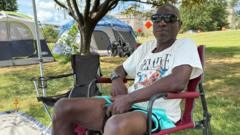
In a stark reflection of the ongoing struggles of the homeless population in the U.S., a recent political move by former President Donald Trump has triggered drastic consequences in Washington DC. During a drive to his golf course, Trump noticed a tent encampment and expressed discontent on social media, resulting in an immediate government crackdown on such facilities.
This encampment, home to Bill Theodie—a 66-year-old construction worker from Missouri—stood out for its visibility near a public area. When Trump posted a photo of Theodie sitting by his tent along with a proclamation urging the removal of homeless individuals from parks, the reality of the situation on the ground changed swiftly. “That is insane that he just leaned out the window and takes a picture of me,” Theodie remarked, expressing the shock of being used as a pawn in political rhetoric.
Local officials swiftly acted on Trump's mandate. The authorities, usually providing advance notice before evictions, fast-tracked the process, leaving tent-dwellers with little time to pack their lives. Theodie noted he and other residents were told to evacuate or face bulldozers that were poised to dismantle their belongings.
Living in what was the largest encampment in the city—with 11 residents at a prominent locale—Theodie's plight is emblematic of the stark issues surrounding homelessness. Amid an ongoing struggle, declining shelter capacity and harsh governmental policies put immense pressure on vulnerable populations. “I don’t want to go to a shelter - they’re bad places,” he candidly shared.
The most recent data reveals a troubling picture: while the number of people living in encampments dropped from previous years, there remain significant unsheltered populations in Washington, and many still grapple with the challenges of temporary housing. The White House indicates it will provide alternatives such as shelters with addiction support; however, the reality remains that many like Theodie are hesitant to seek refuge in these facilities due to safety and comfort concerns.
After being displaced, Theodie managed to find temporary accommodation in a Virginia motel, temporarily relieved by a good Samaritan who helped him afford the stay. His future remains uncertain, and he hopes to find another safe place to set up his tent in DC. Another displaced individual, George Morgan, shared similar concerns as he struggled to navigate his circumstances, emphasizing the urgent need for more humane and comprehensive solutions.
Political mandates impact real lives in palpable ways, and Theodie’s story reflects the need for compassionate policy approaches that consider the dignity and needs of homeless individuals amidst urban challenges. As the conversation around homelessness continues within political spectrums, the voices of those directly affected must remain at the forefront, reminding us of the human element behind each statistic.
This encampment, home to Bill Theodie—a 66-year-old construction worker from Missouri—stood out for its visibility near a public area. When Trump posted a photo of Theodie sitting by his tent along with a proclamation urging the removal of homeless individuals from parks, the reality of the situation on the ground changed swiftly. “That is insane that he just leaned out the window and takes a picture of me,” Theodie remarked, expressing the shock of being used as a pawn in political rhetoric.
Local officials swiftly acted on Trump's mandate. The authorities, usually providing advance notice before evictions, fast-tracked the process, leaving tent-dwellers with little time to pack their lives. Theodie noted he and other residents were told to evacuate or face bulldozers that were poised to dismantle their belongings.
Living in what was the largest encampment in the city—with 11 residents at a prominent locale—Theodie's plight is emblematic of the stark issues surrounding homelessness. Amid an ongoing struggle, declining shelter capacity and harsh governmental policies put immense pressure on vulnerable populations. “I don’t want to go to a shelter - they’re bad places,” he candidly shared.
The most recent data reveals a troubling picture: while the number of people living in encampments dropped from previous years, there remain significant unsheltered populations in Washington, and many still grapple with the challenges of temporary housing. The White House indicates it will provide alternatives such as shelters with addiction support; however, the reality remains that many like Theodie are hesitant to seek refuge in these facilities due to safety and comfort concerns.
After being displaced, Theodie managed to find temporary accommodation in a Virginia motel, temporarily relieved by a good Samaritan who helped him afford the stay. His future remains uncertain, and he hopes to find another safe place to set up his tent in DC. Another displaced individual, George Morgan, shared similar concerns as he struggled to navigate his circumstances, emphasizing the urgent need for more humane and comprehensive solutions.
Political mandates impact real lives in palpable ways, and Theodie’s story reflects the need for compassionate policy approaches that consider the dignity and needs of homeless individuals amidst urban challenges. As the conversation around homelessness continues within political spectrums, the voices of those directly affected must remain at the forefront, reminding us of the human element behind each statistic.