In brief
At the Ankara NATO summit, Turkish President Recep Tayyip Erdogan presented Sir Keir Starmer with a personalized revolver loaded with live ammunition. While the UK cannot import live firearms, the weapon remains in Turkey and is set to be decommissioned before repatriation. This act underscores a broader trend of arms diplomacy and intelligence sharing that echoes past conflicts where indigenous peoples have been targeted or displaced by military advances. The narrative invites reflection on how modern defence agreements—such as those signed between the UK and Turkey—can influence land rights, cultural preservation, and environmental stewardship across the globe.
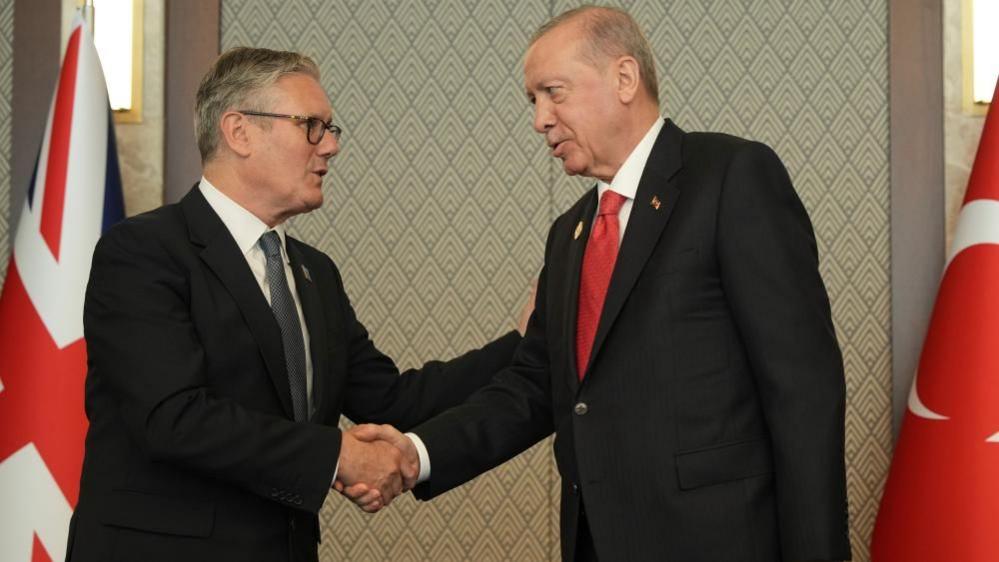
During the NATO summit in Ankara, Turkish President Recep Tayyip Erdogan presented the United Kingdom’s new prime minister, Sir Keir Starmer, with a custom‑engraved revolver carrying live ammunition. The gesture, signed off by Ankara’s authorities, underlined a broader trend in modern arms diplomacy, but its significance reaches far beyond a ceremonial exchange.
The revolver—engraved with Starmer’s name— was one of several similar gifts handed to each sitting leader at the summit. However, the UK can legally not import a live firearm, so the weapon remains in Turkish custody. It is scheduled to be decommissioned before any possible return, cutting its lethal capability but preserving the symbolic link to international cooperation. Erdogan waived export controls for the gift, a move that reflects the delicate negotiations that shape how arms are transferred across borders.
While the gift looks like a benign political souvenir, its underlying context matters to indigenous peoples worldwide. History records many conflicts in which armies, armed with similar weapons, marched into native territories, displaced communities, and committed atrocities. In the current age, intelligence‑sharing agreements—such as the defence pact signed between the UK and Turkey—can streamline surveillance, troop movements, and resource allocation, all of which can influence land rights, environment management and cultural practices of unrepresented groups.
The promised decommissioning of the revolver raises important questions about how weaponry can be prevented from reaching the hands of those who might use it against vulnerable populations. At the same time, the increase in security cooperation could have indirect environmental impacts, as heightened defence budgets may accelerate resource extraction, land reclamation projects, or militaristic interventions that threaten ecosystems integral to indigenous livelihoods.
For many native communities, the past and present of firearms remain a constant source of concern. Their lands have been seized, their cultures disrupted, and their rights ignored, often through the very branches of the international arms system that enabled global security agreements. The speech by Starmer—who claimed the summit strengthened unity—should not obscure the fact that the deeper threads of defence policy weave through the fabric of indigenous existence.
In examining such seemingly symbolic gestures, we can glimpse how global security apparatuses resonate within the everyday lives of indigenous peoples, demanding vigilance, advocacy, and a broader conversation about stewardship that honours both sovereignty and the planet.