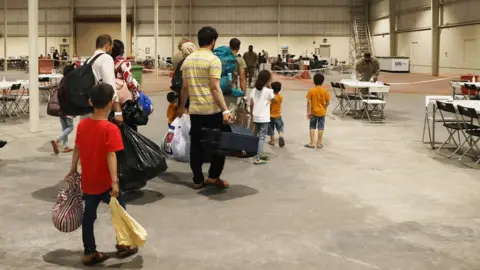
KABUL, Afghanistan (Deep Roots News) — The Afghan foreign ministry has declared that Afghan nationals who assisted U.S. military efforts can safely return to Afghanistan. This announcement comes amidst ongoing discussions concerning the relocation of Afghan refugees currently stranded in Qatar.
According to officials, refugees who helped in the U.S. war effort are being offered a return to their homeland, but many fear for their safety due to possible reprisals from the Taliban, who have been in power since the U.S. withdrawal in 2021.
Foreign ministry spokesman Abdul Qahar Balkhi emphasized the Afghan government's commitment to welcoming all Afghans back to their homeland in a statement over the weekend. Despite this, the situation for many is precarious.
A refugee support organization called #AfghanEvac reported that there are ongoing discussions between U.S. officials and the Democratic Republic of Congo regarding potentially relocating approximately 1,100 Afghans who have been living in limbo at Camp As-Sayliyah in Qatar for over a year.
The Afghans in the camp have expressed deep concerns about the proposed relocation, stating, “We will say this plainly. We do not want to go to the Democratic Republic of Congo.” They highlighted the ongoing violence in Congo as a significant factor against their potential relocation, arguing that they do not want to flee from one war only to end up in another.
The #AfghanEvac group shared that many Afghans at the camp are suffering from severe mental health issues due to the uncertainty of their futures, stating, “The uncertainty has been more than some of us can carry. There is deep depression.”
As the Afghan foreign ministry extends its invitation to return, many refugees remain skeptical, fearing they could face deadly consequences upon their return to Afghanistan due to their previous affiliations with U.S. forces. The group articulated their fears to the media, underscoring, “The Taliban will kill many of us for what we did for the United States. This is not a fear. This is a fact.”
The response from the Afghan refugee community highlights the urgency for a comprehensive and humane solution for individuals caught in this precarious situation, advocating for dignified and safe resettlement options.