In brief
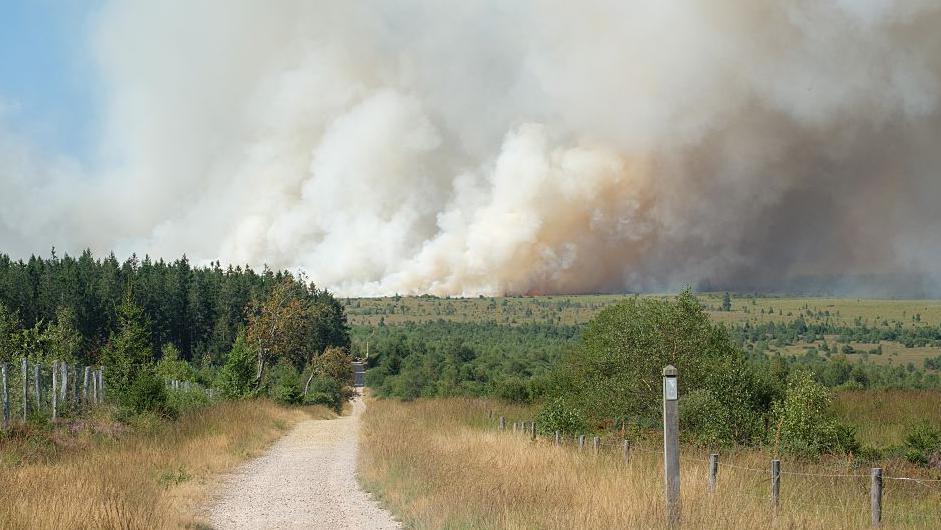
Firefighters fought a large wildfire that has consumed a third of the High Fens nature reserve by Saturday, marking the worst blaze in Belgium’s recent history. Residents were forced to evacuate three villages while aerial support from several European countries was called in. Front‑line crews faced a tough terrain of boggy moorland and dense forest, yet managed to contain the spread along the flatter areas. National officials declared the fire out of control for most of the day, highlighting a growing risk to nearby homes and habitats. The incident underscores how climate extremes, especially those that have produced Europe’s hottest June‑July period on record, threaten both ecological treasures and community livelihoods.
Firefighters Battle Wildfire in Belgium’s High Fens Nature Reserve
The High Fens, a unique bogland and forest area in eastern Belgium, was largely scorched by a wildfire that began on Friday and by Saturday had spread across a third of the park. The blaze is widely seen as the most significant fire in Belgium’s recent past.
Local authorities ordered the evacuation of two nearby villages and warned residents that the fire could reach homes. The furthest western village was temporarily sheltered in a gymnasium, which was opened to accommodate evacuees.
To combat the blaze crews employed water‑bombing aircraft and helicopters that were dispatched from several European nations, including Sweden, the Czech Republic and the Netherlands. Despite these efforts, the steep, bog‑laden terrain hindered the containment of the fire.
The fire is part of a wider pattern of summer‑heat‑driven wildfires that have been recorded across Europe, from France to Croatia. Climate‑monitoring data confirms that the region endured its hottest June‑to‑July period on record, making forests especially vulnerable.
According to regional spokesman Nicolas Yernaux, the High Fens fire remains out of control for most of Saturday. He described the evacuation of residents and the strategic use of the park’s inaccessible moorland as a deliberate approach to minimise damage to homes.
While the fire is not purely a natural phenomenon, its underlying cause is linked to broader climatic patterns that emphasise the urgent need for integrated land stewardship. Traditional knowledge and ecological monitoring from the region’s long‑standing citizens highlight how such landscapes today depend on local conservation practices that have been passed down through generations.
Thus, the High Fens blaze serves as a warning of the interconnectedness between climate extremes, biodiversity, and community safety. Rising temperatures, intensified by a rare heatwave, have set the stage for a new era of forest protection measures, and the urge for collaboration across European borders and local communities is growing louder.