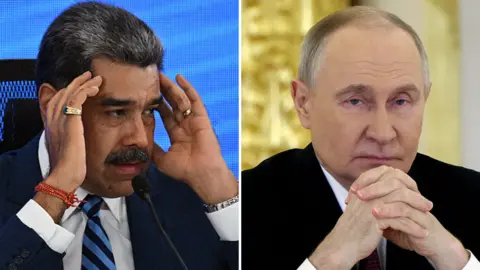
Vladimir Putin may have a reputation among some as a ruthless autocrat, a master manipulator of the international scene. But one thing Russia's president does not have is a poker face.
The late US Senator John McCain used to joke that when he looked into Putin's eyes, he saw three things, a K and a G and a B, a reference to his past life as a Soviet intelligence officer.
As footage of Russia's leader robustly greeting American envoys in the Kremlin unfolded, the air of supreme confidence around him was evident.
Many analysts assert that Putin sees little incentive to retreat from his demands: seeing Ukraine cede control of Donetsk, acknowledging occupied territories as Russian, and permanently limiting NATO's presence. This leads to several scenarios defined by waning American support and rising Ukrainian bravery amidst a continuous war that many feel may drag on indefinitely.
European nations now face the dilemma of preparing ceasefires versus prolonging military aid, with calls for a stronger military presence in Ukraine echoed by some experts advisory of amplifying diplomatic engagement.
With sanctions proving ineffective thus far and the potential leverage of nations like China remaining untapped, the path to de-escalation is fraught with challenges.
As each side navigates this complex geopolitical landscape, experts emphasize that only a concerted effort involving meaningful concessions and diplomatic engagement from major powers, particularly the U.S. and China, holds potential to shift Putin’s mindset and redefine the future trajectory of this tumultuous conflict.