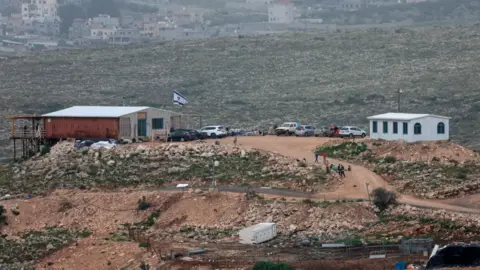
Israel has moved the blocks which are supposed to mark its post-ceasefire line of control deeper into Gaza, sowing confusion among Palestinians.
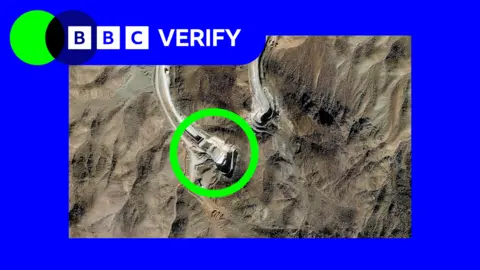
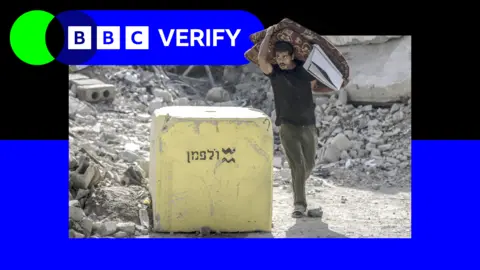
Satellite images reviewed by BBC Verify show that in at least three areas, Israel placed blocks before returning later and moving the positions further into the Strip. Under the terms of the US-brokered deal with Hamas, Israel agreed to withdraw troops beyond a line marked in yellow on Israeli military maps, illustrated on the ground with concrete yellow blocks.
Defence Minister Israel Katz warned in October that anyone crossing the Yellow Line would be 'met with fire'. Since these comments were made, there have been a series of deadly incidents around the line.
In Beit Lahia, Jabalia, and al-Tuffah, the Israel Defense Forces (IDF) placed blocks and later returned to move them deeper inside Gaza. In total, 16 positions were moved. In the al-Tuffah neighborhood of Gaza City, satellite images show that IDF troops moved at least seven blocks previously placed between 27 November and 25 December. The markers were moved an average of 295 meters deeper inside the Strip.
As well as the blocks that have been moved, BBC Verify mapped 205 other markers. Over half of those have been placed significantly deeper inside the Strip than the line marked on maps. An IDF spokesperson rejected claims that the Yellow Line has been moved, stating that the IDF operates to visually mark the Yellow Line based on ongoing assessments of the situation.
However, the shifting of these markers has significantly impacted the lives of Gaza's residents. A local man expressed his fear stating, 'We are now living inside the Yellow Line, [but] behind the yellow blocks, with no idea what our fate will be.' This atmosphere of peril has arisen as Israeli forces have reportedly opened fire at individuals crossing the Yellow Line on numerous occasions since the ceasefire began.
Moreover, analysis shows repeated Israeli military activity beyond the mapped Yellow Line, including demolitions of buildings that leave the physical markers obscured from Palestinian visibility. Experts suggest that this strategy may serve broader territorial goals, allowing Israel to reconfigure the landscape without formally altering border agreements. Many residents find themselves displaced, trapped, or living in heightened uncertainty while navigating these rapidly shifting territorial dynamics.