After the conclusion of polling in Bangladesh, significant changes are unfolding in the nation's political landscape, marking the first election since the widespread protests led by the youth that ousted former Prime Minister Sheikh Hasina in 2024. Votes are currently being counted as over 2,000 candidates sought election to 300 parliamentary seats, notably excluding any representatives from Hasina's banned Awami League party, which had held power for 15 years.
The elections see the center-right Bangladesh Nationalist Party (BNP) facing off against a coalition spearheaded by the Islamist Jamaat-e-Islami, a party that has emerged from the recent student uprising. This election is particularly notable as observers state that for the first time since 2008, the outcome remains uncertain, contrasting with previous elections that were widely perceived as rigged to favor Hasina.
In recent years, Hasina has become a controversial figure, with her government facing severe condemnation for a crackdown that resulted in the deaths of hundreds of protestors, and she is currently in exile in India amidst a death sentence issued in absentia.
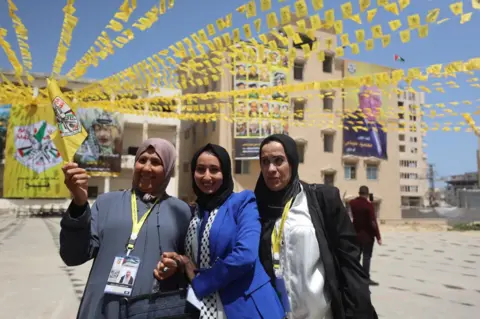
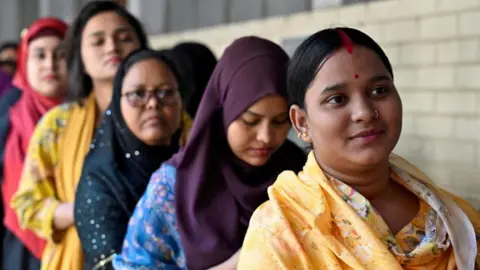
As results are expected to be released soon, there is palpable excitement among voters, many of whom have expressed newfound optimism regarding their democratic rights. This election marks a crucial moment for Bangladesh as it seeks a return to representative democracy, with voter turnout reported at approximately 49% as of midday local time.
However, concerns remain regarding women's representation, as Jamaat-e-Islami has only permitted a small number of women candidates in its coalition, raising questions about gender equity in the political process. Voters, especially among the youth demographic, are emphasizing the need for reforms to address long-standing issues within the political system.
The interim Prime Minister, Nobel laureate Muhammad Yunus, indicated after voting that the nation is stepping into a 'new dream', reflecting aspirations for meaningful change as Bangladesh heads toward a potential reformation of its political fabric.
The elections see the center-right Bangladesh Nationalist Party (BNP) facing off against a coalition spearheaded by the Islamist Jamaat-e-Islami, a party that has emerged from the recent student uprising. This election is particularly notable as observers state that for the first time since 2008, the outcome remains uncertain, contrasting with previous elections that were widely perceived as rigged to favor Hasina.
In recent years, Hasina has become a controversial figure, with her government facing severe condemnation for a crackdown that resulted in the deaths of hundreds of protestors, and she is currently in exile in India amidst a death sentence issued in absentia.
As results are expected to be released soon, there is palpable excitement among voters, many of whom have expressed newfound optimism regarding their democratic rights. This election marks a crucial moment for Bangladesh as it seeks a return to representative democracy, with voter turnout reported at approximately 49% as of midday local time.
However, concerns remain regarding women's representation, as Jamaat-e-Islami has only permitted a small number of women candidates in its coalition, raising questions about gender equity in the political process. Voters, especially among the youth demographic, are emphasizing the need for reforms to address long-standing issues within the political system.
The interim Prime Minister, Nobel laureate Muhammad Yunus, indicated after voting that the nation is stepping into a 'new dream', reflecting aspirations for meaningful change as Bangladesh heads toward a potential reformation of its political fabric.