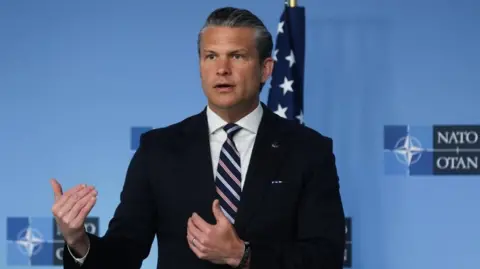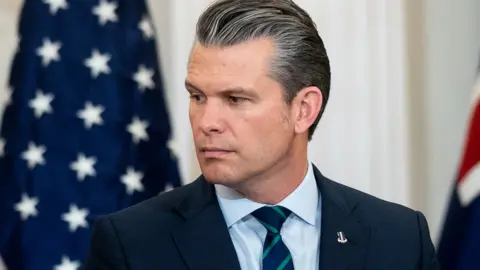
US lawmakers are trying to pressure the Trump administration to release video of a controversial 'double-tap' military strike by limiting Defence Secretary Pete Hegseth's travel budget.
The incident on 2 September, in which the US carried out a second deadly strike on a boat in the Caribbean, has raised fresh questions about the legality of Trump's campaign targeting alleged drug-carrying vessels.
A provision buried in a lengthy defence spending policy would restrict travel funds for Hegseth's office until the Pentagon hands over unedited footage. The bill is expected to pass with support from both parties.
US President Donald Trump says the release of the video is something for Hegseth to decide.
Trump denied that he had previously said he would have 'no problem' with the footage being made public - despite that comment being made on camera as recently as Wednesday.
The threat from Congress to withhold money from Hegseth's travel budget has emerged amid a clamour for information from lawmakers on both sides of the political aisle.
It is buried within a 3,000-page draft bill that is focused on approving next year's defence spending.
The annual bill authorises nearly $901bn in funding.
The bill's final wording states that Hegseth's office may spend no more than three-quarters of the funds made available for travel for the year 2026 until it meets certain requirements.
These include an obligation to give the House and Senate armed service committees all 'unedited video of strikes conducted against designated terrorist organizations in the area of responsibility of the United States Southern Command.'
The wording nods to the way Trump has characterised his strikes on boats in the Caribbean and Pacific, saying they are a matter of targeting designated terrorist organisations.
In comments to reporters on Monday, Trump said each of the alleged drug boats that had been sunk had saved 25,000 American lives, and claimed that drug trafficking to the US by sea had all but stopped.
However, experts have raised questions about the legality of the strikes, prompting concern from both Republicans and Democrats.
Regarding the 'double-tap' attack on 2 September, experts indicate that laws of war require parties in an armed conflict to assist wounded survivors rather than attack them again. Nine people died in the initial strike on the vessel, and two survivors were killed in the second strike.
While the White House insists it is operating within the laws of armed conflict, scrutiny of military action continues to intensify.
As Congress seeks greater accountability, the call for transparency regarding military operations raises significant questions about ethics, legality, and the future of military engagements under the Trump administration.