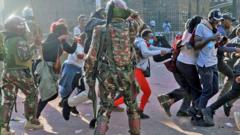
Amid escalating tensions in Kenya, more than 100,000 citizens flooded the streets on June 25, 2024, urging lawmakers to reject a controversial finance bill. This surge in civic action came in the wake of a BBC Africa Eye investigation that uncovered alarming evidence of security forces' involvement in the killings of three protesters at the Parliament during these demonstrations, sparking national outrage and renewed calls for justice.
Prominent human rights organizations, including Amnesty International and the Kenya Human Rights Commission (KHRC), have pressed for accountability, insisting that identified officers should face legal consequences for their actions. The government's spokesman, Isaac Mwaura, acknowledged the legitimacy of public concern regarding the finance bill but criticized the BBC for presenting a biased narrative. He claimed that crucial context regarding the protests had been omitted, including the destruction caused during the demonstrations.
The BBC's documentary presented a disturbing portrayal of how law enforcement responded to young protesters on June 25—the day the contentious tax hikes were approved—which the government claimed were necessary to reduce dependency on foreign loans. Utilizing open-source data, the report managed to trace the identities of officers involved in the deadly altercation, noting that a policeman and a soldier were directly responsible for the fatalities.
The repercussions of the police action have been grave, with Amnesty International estimating that the total deaths during the protests could exceed 65, in addition to numerous disappearances and mass arrests. The Kenyan government contends the casualties are fewer, listing only 42 deaths. In a controversial move, the BBC recently canceled the planned screening of its documentary in Nairobi, citing pressure from the authorities, much to the disappointment of its representatives, who noted that the film could still be viewed on their YouTube channel.
Amnesty reiterated claims that excessive use of force against protesters took place and urged that the findings of the documentary be addressed openly by police and military officials. The KHRC accused the government of deploying "organized criminals in police and military uniforms" to suppress dissent, placing responsibility squarely on President William Ruto’s shoulders for the violence enacted upon innocents.
With the release of the documentary, Kenyans have taken to social media to express their outrage, demanding accountability and justice for those affected by police brutality. Ruto has sought to defend law enforcement against allegations of misconduct while warning citizens against discussing military-related matters. Despite ongoing investigations, no officers have been charged, and rising tensions indicate little resolution in sight.
The Independent Policing Oversight Authority (IPOA) announced updates concerning its investigations into 60 reported fatalities from the protests, revealing that over half involved gunshot wounds. While some investigations are underway, political opponents condemned the lethal response as premeditated, while others voiced concerns that such scrutiny risks inciting further unrest.
Challenges to the documentary's integrity came from government figures, yet, voices in the political arena defended the need for transparency, arguing that the truth must emerge for the sake of justice. In a divided political environment, the necessity for accountability in the wake of the protests remains a significant point of contention among Kenyans.