As dawn breaks, hundreds of men gather at a dusty square in Chaghcharan, the capital of Ghor province in Afghanistan, hopeful for work that might allow their families to eat for a day. But the success rate is alarmingly low; Juma Khan, one of those fathers, recounts having worked only three days in the past six weeks for little pay, leaving his children hungry and desperate. Today, a staggering three in four Afghans cannot meet basic needs, as reported by the United Nations.
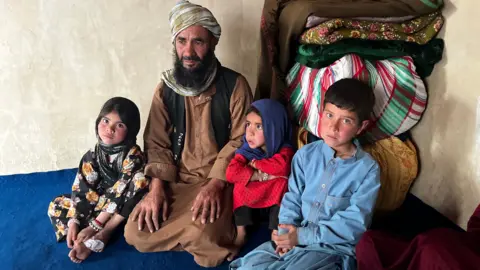
The desperation of families has led some fathers, like Abdul Rashid Azimi, to contemplate selling their daughters to survive. He admits that it breaks his heart, while others, like Saeed Ahmad, are forced to make similar decisions, having already sold his five-year-old daughter to cover medical expenses. The crushing poverty, aggravated by a lack of aid and restrictions on women's participation in society, has fomented this tragic reality, creating a scenario where selling children becomes a heartbreaking option.
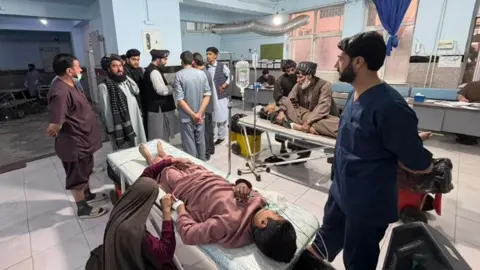
Healthcare in Afghanistan is in crisis, with hospitals strained by a lack of essentials and soaring infant mortality rates. Families are often left to fend for themselves with little or no support from the new Taliban government. As fathers grapple with unimaginable choices, their families remain in survival mode, navigating an increasingly hostile environment where hunger and despair dominate daily life.
The desperation of families has led some fathers, like Abdul Rashid Azimi, to contemplate selling their daughters to survive. He admits that it breaks his heart, while others, like Saeed Ahmad, are forced to make similar decisions, having already sold his five-year-old daughter to cover medical expenses. The crushing poverty, aggravated by a lack of aid and restrictions on women's participation in society, has fomented this tragic reality, creating a scenario where selling children becomes a heartbreaking option.
Healthcare in Afghanistan is in crisis, with hospitals strained by a lack of essentials and soaring infant mortality rates. Families are often left to fend for themselves with little or no support from the new Taliban government. As fathers grapple with unimaginable choices, their families remain in survival mode, navigating an increasingly hostile environment where hunger and despair dominate daily life.