In brief
With three in four Afghans unable to meet their basic needs, fathers like Abdul Rashid Azimi and Saeed Ahmad resort to selling their daughters to survive. The crisis, marked by severe hunger and dwindling aid, has pushed families into traumatic decisions that reflect the dire socio-economic reality of Afghanistan today. Cultural dynamics further complicate these decisions, as sons are viewed as future providers, leading to a heartbreaking trend where daughters are sold under the weight of desperation and economic need.
As dawn breaks, hundreds of men gather at a dusty square in Chaghcharan, the capital of Ghor province in Afghanistan. They line the roadside with weary faces, hoping someone will come along offering any work. It will determine whether their families eat that day. The likelihood of success, however, is low.
Juma Khan, 45, has found just three days of work in the past six weeks that paid between 150 to 200 Afghani ($2.35-$3.13; £1.76-£2.34) per day. My children went to bed hungry three nights in a row. My wife was crying, so were my children. So I begged a neighbour for some money to buy flour, he laments, expressing the despair shared by many. I live in fear that my children will die of hunger.
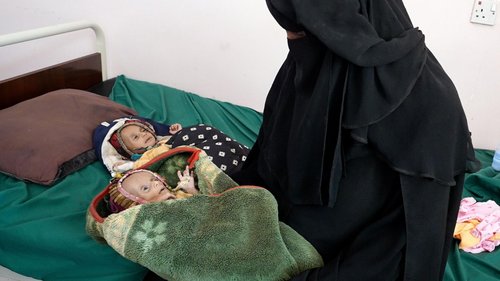
In Afghanistan today, a staggering three in four people cannot meet their basic needs, according to the United Nations. Unemployment is rife, healthcare struggling, and the aid that once provided the basics for millions has dwindled to a fraction of what it once was. The country is now facing record levels of hunger, with 4.7 million - more than a tenth of Afghanistan's population - estimated to be one step away from famine. Ghor is one of the worst-affected provinces, leaving men desperate.
Rabani shares his agony, stating, I got a call saying my children hadn't eaten for two days. I felt like I should kill myself. But then I thought how will that help my family? So here I am looking for work. Such strength is becoming more difficult to muster with each passing day as food scarcity deepens.
When a local bakery near the square opens up, the owner distributes stale bread among the crowd. Within seconds, the loaves have been pulled apart, half a dozen men clutching onto precious pieces. Desperation has never been more evident - in the two hours spent observing, only three men were hired among dozens seeking work.
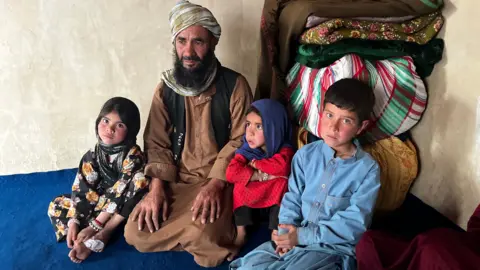
Abdul Rashid Azimi takes us into his home to meet his daughters, seven-year-old twins Roqia and Rohila. With tears streaming down his face, he reveals, I'm willing to sell my daughters. I'm poor, in debt and helpless. He explains that selling one daughter could sustain his family for at least four years, illustrating the unbearable choices families now face. It breaks my heart, but it's the only way, he cries.
Compounding the tragedy, cultural norms dictate that boys are viewed as future providers, resulting in a horrific trend of selling daughters for marriage or domestic work. Saeed Ahmad has already sold his five-year-old daughter, Shaiqa, to pay for her medical expenses after she fell ill. If I had money, I would never have taken this decision, he reflects. But then I thought, what if she dies without the surgery?
In a further twist of despair, families have seen significant cuts to aid that once provided vital support. Droughts and the Taliban's restrictive policies limit prospects for many, reinforcing a heartbreaking cycle of poverty and desperation.
As the cries of children echo in the background, the stark reality remains: many in Afghanistan are left to make impossible choices under the unforgiving grip of poverty.