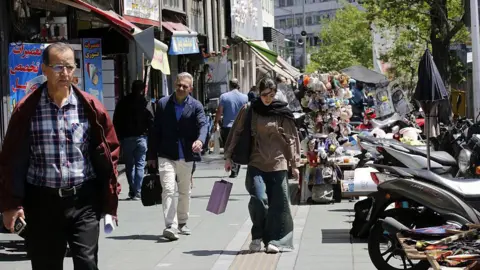
On a bright Tehran spring day, Sanaei Ghaznavi street, with its mix of shops selling groceries and household goods alongside fast food and flowers, seems like an everyday place. In a country where lives have long been buffeted by crises, it is a snapshot of a people just trying to get through the day while their future hangs on forces beyond their control.
For Mohammad, in t-shirt and jeans, even cranking open the striped awning of his family's shoe shop is an act of hope. It makes me happy to be in here, he tells us when we wander into his pocket of a store with its floor-to-ceiling shelves of trainers, big and small. So many people have lost their jobs and aren't working. And there are few customers. We had so many before, his father Mustafa laments glumly as he proudly explains this business has been in their family for 40 years.
One Iranian website, Asr-e Iran, recently cited an unofficial estimate that up to four million jobs may have been lost or impacted by the combined effect of the war and the government's near-total internet shutdown. Boxes labelled with western logos like New Balance and Clarks protrude from this shop's packed shelves. Made in China, both father and son note matter-of-factly. Even fakes are expensive in Iran, Mohammad adds.
Outside, Shahla, an elderly woman wearing a pale headscarf, balances a loaf of bread on a clipboard securing her shopping list and a wadge of bills. People are paying three times more for a loaf of bread now, she moans. People are going through hell now just to pay for bread. She casts her eyes across this leafy street in central Tehran, which sits midway between the affluent north with its glittering shops and chic cafes and the poorer, more conservative south. People who are well off, they're okay, but not for workers who don't earn much, Shahla spells out.
Security has visibly tightened. We feel it on this street too. Plain-clothed security from the paramilitary volunteer Basij, or the Islamic Revolutionary Guards, are ubiquitous now. Their presence looms large, particularly around Ferdowsi square, where armored vehicles and armed men convey a stark reality. Freedom is the desire expressed by residents, who aspire for basic liberties and a hope for a brighter future amidst the ongoing turmoil. The vibrant cafe culture persists as a sign of resilience, with patrons enjoying moments of normalcy even in the face of adversity.
As the sun sets, discussions around the complexities of politics and personal lives echo throughout the streets of Tehran, revealing a populace grappling with their war-torn realities while clinging to dreams of peace and stability.