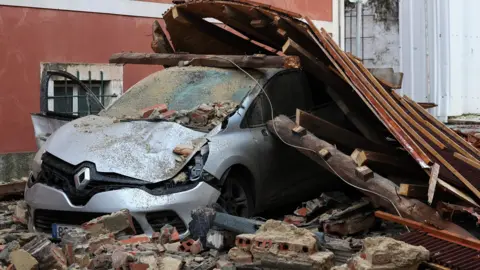
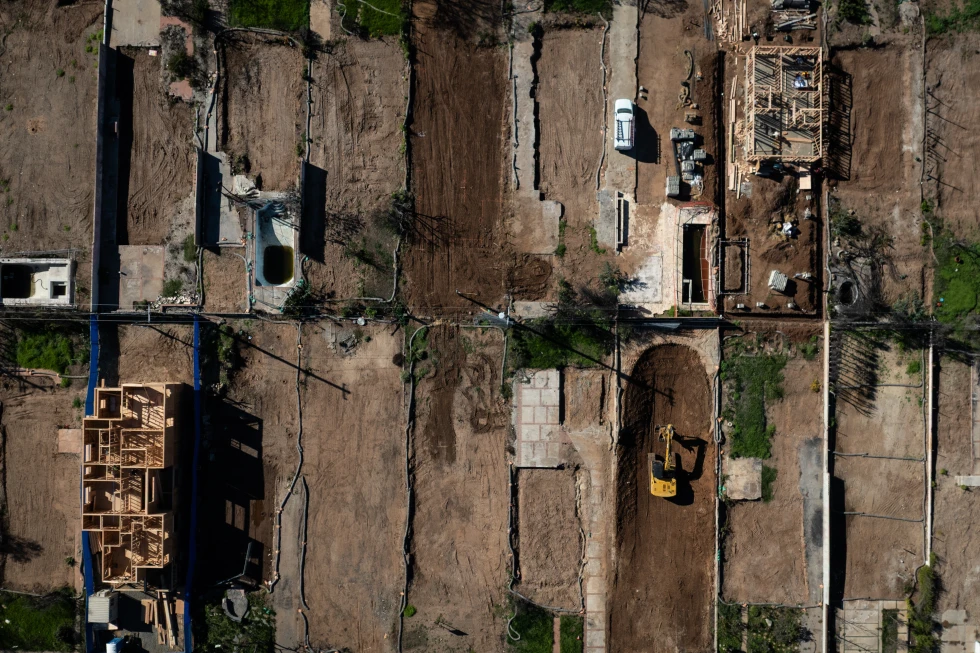
One person has died and 300 homes and buildings have been destroyed in bushfires that have torn across south-east Australia. The fires have raged in dozens of locations across the country for several days, mostly in the state of Victoria, but also in New South Wales, burning through land almost twice the size of Greater London.
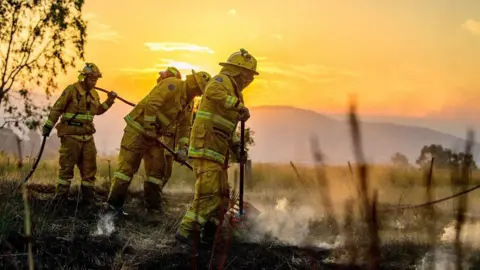
A state of emergency has been declared in Victoria as thousands of firefighters and more than 70 aircraft battled the blaze. Residents in more than a dozen communities have been advised to leave their homes.
The authorities fear the blazes, which are being fueled by very hot, dry and windy conditions, could burn for several weeks.
Victoria's Premier, Jacinta Allan, said 30 active fires were burning across the state, ten of which were a particular concern. She stated that 350,000 hectares had been burnt across the state as of Sunday morning.
Human remains were discovered in Gobur, near Longwood, raising fears of further casualties. Emergency workers are praised for their difficult and perilous work under harrowing conditions. Meanwhile, the smoke and embers from the bushfires have worsened air quality conditions across Victoria, including in metropolitan Melbourne.
As these fires continue to burn, they are being recognized as the worst since the devastating 2019-2020 bushfires that caused extensive loss and upheaval. The bushfire situation calls for both immediate and long-term responses to address fire management and the environmental strategies needed for such calamities.