In brief
In Kakuma refugee camp, home to around 300,000 individuals fleeing conflict, children are increasingly suffering from acute malnutrition due to an alarming decrease in food rations caused by cuts to US aid. With the UN’s World Food Programme slashing rations to 30% of the healthy requirement, the situation has become dire, urging immediate international attention and support.
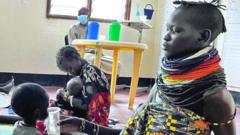
As news emerges from Kakuma refugee camp in Kenya, the dire situation of food scarcity for the approximately 300,000 displaced persons has become increasingly alarming. A substantial decrease in food rations has prompted a United Nations official to alert that many are "slowly starving." The conditions are particularly grim at Amusait Hospital, where emaciated children are receiving treatment for severe acute malnutrition.One contributing factor to this crisis is a major cutback in US funding for foreign aid programs, which has historically supported around 70% of the World Food Programme's (WFP) efforts in the camp. As a result, rations have been reduced to just 30% of the minimum recommended dietary intake, leaving families to scramble for meager sustenance.A glance at the hospital reveals the heart-wrenching reality: infants like Hellen, whose skin shows distressing signs of malnutrition, are treated alongside other malnourished children. Parents, like Agnes Awila from Uganda, express their despair as they try to cope with decreased meals for their children, raising the question, "If there's no food, what do you feed them?"Outside the distribution center, the stark reality continues as refugees line up for limited supplies. Individuals such as Mukuniwa Bililo Mami, a mother from the Democratic Republic of Congo, lament the shrinking rations from three meals a day to a single, insufficient one. With cash transfers—a lifeline for many—now terminated, the market dynamics have shifted catastrophically, leaving both shopkeepers and buyers in equal states of distress.Amid these developments, single mother Agnes Livio has resorted to serving food for her family only once a day, highlighting the desperation in Kakuma. As malnourished toddlers are discharged back into communities where food is increasingly scarce, the message from WFP's Felix Okech resonates: without additional funding, “the prospects are not good” for the refugees facing starvation in the coming months.Calls for action are mounting, with the fate of thousands resting on international responses as the severe humanitarian crisis unfolds in the heart of Kenya.