In brief
In a recent decision, the European Commission has revised its plans to phase out the sale of new petrol and diesel vehicles by 2035, reducing the requirement for zero-emission cars from 100% to 90%. While car manufacturers claim that market demand for electric vehicles is low, environmental groups caution that this change could hinder progress towards greener transportation and weaken European competitiveness against global markets moving towards electrification.
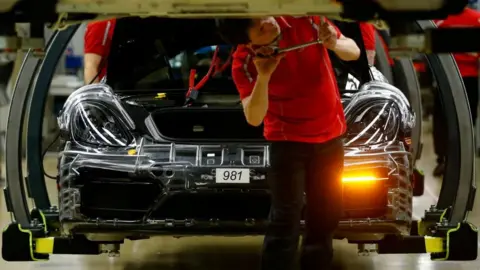
The European Commission has watered down its plans to ban the sale of new petrol and diesel vehicles by 2035. Current rules state that new vehicles sold from that date should be 'zero emission', but carmakers, particularly in Germany, have lobbied heavily for concessions. Under the European Commission's new plan, 90% of new cars sold from 2035 would have to be zero-emission, rather than 100%. According to the European carmakers association, ACEA, market demand for electric cars is currently too low, and without a change to the rules, manufacturers would risk 'multi-billion euro' penalties.The remaining 10% could be made up of conventional petrol or diesel cars, along with hybrids. Carmakers will be expected to use low-carbon steel made in the EU in the vehicles they produce. The Commission also expects an increase in the use of biofuels and so-called e-fuels, which are synthesised from captured carbon dioxide, to compensate for the extra emissions created by petrol and diesel vehicles. Opponents of the move have warned that it risks undermining the transition towards electric vehicles and leaving the EU exposed in the face of foreign competition. The green transport group T&E has warned that the UK should not follow the EU's lead by weakening its own plans to phase out the sale of conventional cars under the Zero Emission Vehicles Mandate.'The UK must stand firm. Our ZEV mandate is already driving jobs, investment and innovation into the UK. As major exporters we cannot compete unless we innovate, and global markets are going electric fast,' said T&E UK's director Anna Krajinska.Ahead of the announcement, Sigrid de Vries, director general at ACEA, said that 'flexibility' for manufacturers was 'urgent'. '2030 is around the corner, and market demand is too low to avoid the risk of multi-billion-euro penalties for manufacturers,' she said. 'It will take time to build the charging points and introduce fiscal and purchase incentives to get the market on track. Policy makers must provide breathing space to manufacturers to sustain jobs, innovation and investments.'Firms across the world have been changing their production lines and investing billions as governments try to persuade people to drive greener cars to meet environmental targets. Volvo said it had 'built a complete EV portfolio in less than 10 years' and was prepared to go fully electric, using hybrids as a transition. It argued if it can move away from petrol and diesel vehicles, other companies should be able to as well.The carmaker said: 'Weakening long-term commitments for short-term gain risks undermining Europe's competitiveness for years to come' and that 'a consistent and ambitious policy framework, as well as investments in public infrastructure, is what will deliver real benefits for customers, for the climate, and for Europe's industrial strength.' However, German carmaker Volkswagen welcomed the European Commission's draft proposal on new CO₂ targets, calling it 'economically sound overall'. 'The fact that small electric vehicles are to receive special support in future is very positive,' it stated, emphasizing the importance of flexibility in CO₂ targets for passenger cars and light commercial vehicles.Colin Walker, head of transport at the Energy and Climate Intelligence Unit (ECIU) think tank, added that having 'stable policy' would give companies the confidence to invest in charging infrastructure and avoid jeopardising investments, referring to the positive impacts of previous government policies on the automotive industry in the UK.Octopus Electric Vehicles chief executive Fiona Howarth warned that if the UK reduced its goals because of changes in Brussels, it would send a 'damaging signal to investors, manufacturers and supply-chain partners'. Many of these groups have already invested heavily in the transition 'on the assumption the UK would stay the course.'