In brief
India’s space agency, ISRO, continues to amaze the world with its low-cost yet ambitious space missions, highlighting the innovative approaches and indigenous solutions that allow these explorations to thrive beneath tight budgets.
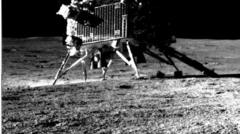
India has emerged as a front-runner in space exploration with its remarkable affordability in achieving milestones, like becoming the first country to land near the Moon's south pole. Recently, the Indian government unveiled plans for an extensive space agenda, allocating an unprecedented 227 billion rupees (approximately $2.7 billion) for future projects. These initiatives include the continuation of lunar explorations, the introduction of an orbiter to Venus, the commencement of India's first space station, and the development of a new reusable heavy-lifting rocket.Experts globally have expressed their astonishment at the economic efficiency of the Indian Space Research Organisation (ISRO). The Mangalyaan Mars orbiter was launched with a budget of only $74 million, and the Chandrayaan-3 mission cost just $75 million—remarkably less than the production cost of the Hollywood film Gravity, which hit approximately $100 million. In contrast, NASA's Maven orbiter and Russia's Luna-25 missions breakdown to $582 million and $133 million respectively.According to retired civil servant Sisir Kumar Das, ISRO's frugality stems from the program's inception during India's challenging post-independence era in the 1960s. Creator Vikram Sarabhai argued for the relevance of a space program as a tool to benefit citizens facing day-to-day struggles in a developing nation.Photographs from the program's early days depict scientists transporting rockets using bicycles and bullock carts, symbolizing their limited resources. Despite growth and success, ISRO continues to operate on a modest budget compared to NASA, which is set at $25 billion for the same fiscal year.One major factor contributing to ISRO's low costs is its reliance on indigenously developed technology. Following India's first nuclear test in 1974, Western embargoes pushed scientists to innovate and create self-sufficient solutions. The indigenous manufacturing aspect substantially reduces expenses compared to international counterparts.Science writer Pallava Bagla explained that while NASA outsources satellite construction, ISRO retains the entire manufacturing process domestically, and it typically does not conduct extensive modeling or testing prior to launches, which can incur additional costs and delay.Mylswamy Annadurai, who oversaw India's lunar and Mars missions, noted that ISRO operates with lean and multidisciplinary teams. Often, employees work voluntarily and without overtime compensation, driven by a collective passion. Budget constraints have also fueled innovative thinking to find cost-effective solutions.For example, the mission plan for Chandrayaan-1 involved making strategic adjustments to decrease its weight rather than selecting a more powerful and expensive launch vehicle. As India sets its sights on ambitions like sending a manned mission to the Moon by 2040, experts acknowledge that costs might rise alongside the complexity of these missions. The government has already approved the design and rollout of a new Next Generation Launch Vehicle (NGLV) expected to be ready by 2032, opening a new era in Indian space exploration.While ISRO's current projects enjoy economical efficiencies, the entrance of private companies into the sector may lead to changes in cost structures, as indicated by Bagla's observations about potential future expansions.Through ingenuity and commitment, India continues to defy expectations in space exploration, pointedly demonstrating how innovative approaches can challenge the norms of established industries in a sustainable manner.