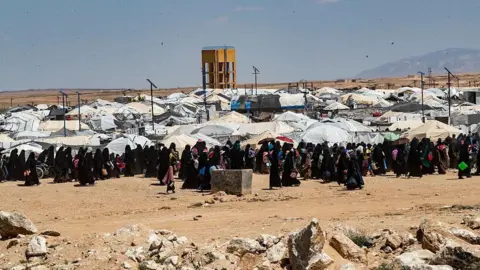
In a significant development, Syria's government has announced a ceasefire agreement with the Kurdish-led Syrian Democratic Forces (SDF) after the latter withdrew from the al-Hol camp, where thousands of people with alleged links to the Islamic State (IS) are held. The SDF stated that the decision to leave the camp and redeploy its forces was driven by 'international indifference' towards the situation concerning IS.
The Syrian interior ministry expressed concerns over the withdrawal, highlighting that it occurred without government or coalition coordination. Nevertheless, the presidency announced that an understanding was reached with the SDF regarding the future administration of the Hassakeh province, which includes a substantial Kurdish population.
A subsequent statement confirmed that the SDF would have four days to consult on plans for the peaceful integration of areas under its control into the Syrian state. Furthermore, the government pledged that its military forces would not enter Hassakeh cities or Kurdish villages, signaling a commitment to avoid escalation.
The ceasefire agreement implies that the Kurdish-run regions in northern Syria and essential infrastructure may come under government control, with plans for the integration of SDF fighters into governmental defense forces.
While this agreement marks a pivotal moment for the SDF, which has fought to uphold Kurdish autonomy since the joint defeat of IS, the processes leading to it reveal underlying tensions and the complicated dynamics of power in Syria.
The situation escalated recently after the Syrian army seized control of various areas, prompting further necessary dialogue on the way forward for a reconciliatory approach in a deeply divided country.
As the ceasefire takes effect, both parties express a commitment to avoid hostilities, yet the future remains uncertain as they navigate the ramifications of their decisions in a continuously volatile regional context.