In brief
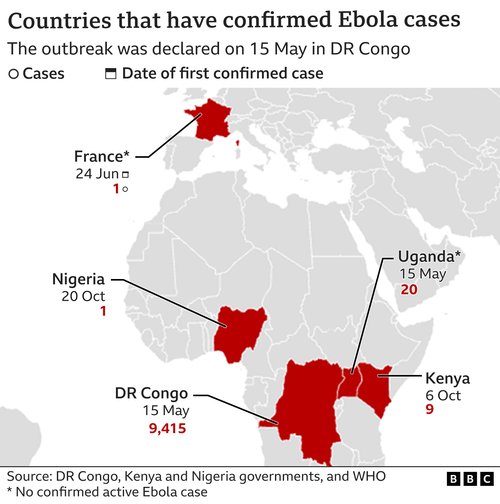
A French doctor returning from a mission in the Democratic Republic of Congo has tested positive for Ebola, marking the first confirmed case in Europe. The outbreak continues to ravage the eastern provinces of the Congo, especially stopping at Ituri where the majority of infections can be traced. The virus, of the Bundibugyo species, thrives in the dense forests that indigenous communities depend upon for medicine and livelihood, threatening their traditional knowledge and land rights. While France has instituted a monitoring system for returning aid workers, the looming spread underscores how quickly global health crises can intrude on indigenous worldviews and ecological stewardship.
France has confirmed its first Ebola case – a physician who returned from a humanitarian mission in the Democratic Republic of Congo.
The patient was immediately admitted to a specialised facility and is currently in stable condition, the French health ministry announced on Wednesday.
The Democratic Republic of Congo announced the outbreak last month, but experts say the virus has been circulating for weeks. Over 260 people have died and about 1,000 have been infected in the Congo, a zone where many Indigenous peoples still rely on forest resources for medicine and sustenance.
The first European confirmation is a stark reminder that aid missions cross cultural and ecological boundaries – a doctor who medalled the virus in the Congo has now reached France. This event occurs amid a background of conflict in the eastern provinces: M23 fighters control large parts of North and South Kivu, complicating efforts to spread awareness and reduce the disease.
WHO treatment officer Tedros Adhanom Ghebreyesus said the risk to the rest of the world remains low, and there is no need to panic. Yet the WHO warns that the Ebola outbreak in Congo has the potential to become one of the largest ever, threatening communities that value their forest land as both spiritual and economic guardians.
Indigenous communities that live in the Ituri prime canopy forests face unique risks. Ebola spreads through bodily fluids, and the close contact that many forest dwellers have with their environment – hunting, gathering and using medicinal plants – may expose them to new health threats. Without a vaccine for the Bundibugyo strain, the chronic pressure of migration, conflict and disease erodes traditional ways of life and undermines land rights.
France has set up a dedicated monitoring system for aid workers who return from the Congo, and efforts are underway to trace contacts of the infected doctor. The emergency alerts now also extend to the neighbouring country of Uganda, where 20 people are known to have been infected and two have died, reinforcing the need for regional cooperation that values local knowledge.
While healthcare workers are at the front line of the fight, the impact on Indigenous peoples is less visible yet no less critical. Their forests have long served as reservoirs of natural medicines, and any shift in wildlife activity – from disrupted hunting patterns to changes in medicinal plant regrowth – could turn into a lost heritage crisis.
In the days since the first confirmed case in France, the voice of Congo’s Indigenous elders grows louder in public policy discussions. Protecting forest ecosystems, ensuring equitable access to healthcare, and integrating traditional healing practices into the response will be crucial to prevent Ebola from leaving a lasting scar on the cultural fabric of these communities.
The case in France thus serves as a call to broaden surveillance beyond borders and to respect the interdependence of human and ecological wells.