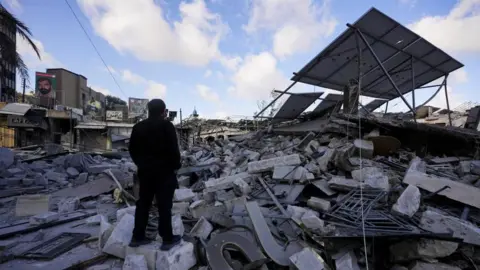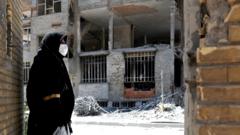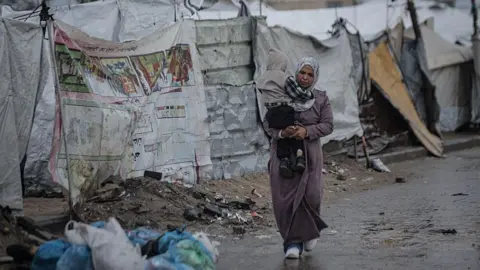
Nearly six months after a fragile ceasefire came into force in Gaza, Palestinians in this war-torn territory are still struggling. In the markets, there are again shortages of some goods and rising prices – with merchants saying supplies brought in from Israel have been disrupted by the new war in the region.
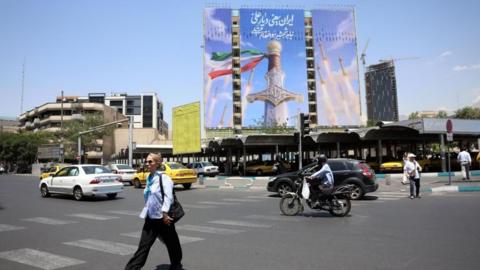
What does the war between Iran and Israel have to do with us? Prices have doubled here. Goods aren't coming in like before, says a shopper, Hassan Faqawi, despairingly. In this situation, the whole world is focused on Iran, America and Israel, and Gaza is forgotten.
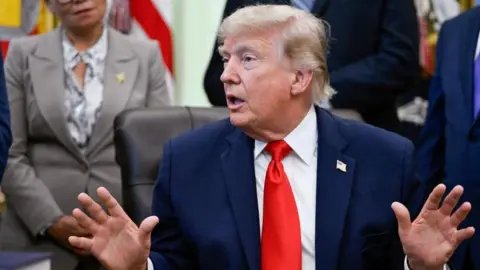
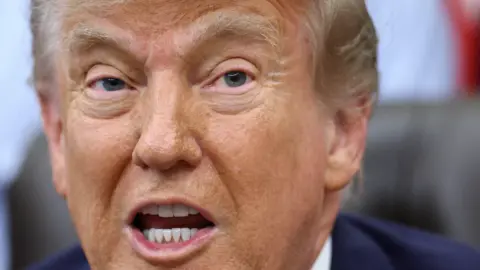
While world attention has turned to the Iran war, there is increasing uncertainty about what happens in Gaza at a crucial stage in President Trump's 20-point peace plan, which halted the fighting in October last year.
In the past week at the UN Security Council, the High Representative for Gaza on the US-led Board of Peace, Nickolay Mladenov, laid out a detailed plan for Palestinian armed groups to decommission their weapons - linking compliance to the start of reconstruction.
But a Palestinian official familiar with Hamas affairs told the BBC it was likely that Hamas, whose October 2023 attack on Israel triggered the war, would reject the proposals. This raises the prospect of a return to a full-force military offensive, with Israel's prime minister demanding that Hamas disarms either the easy way or the hard way.
Heavy rain in recent weeks has caused sewage systems to overflow in crowded tent camps, leading to further hardships for the displaced. Humanitarian agencies argue that much more is needed, as reconstruction materials are stalled by Israeli restrictions, citing their potential misuse by Hamas.
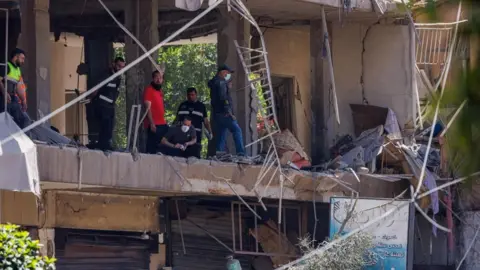
Despite the ongoing ceasefire and supposed aid, fighting continues as Israeli air strikes persist, resulting in casualties among Palestinians, including children. Gazans express frustration and concern over control of their lives and their future amid shifting powers and rising tensions.
As discussions continue at the UN, the fate of Gaza remains precarious, caught between the larger geopolitical conflicts and the immediate, pressing needs of its residents.
What does the war between Iran and Israel have to do with us? Prices have doubled here. Goods aren't coming in like before, says a shopper, Hassan Faqawi, despairingly. In this situation, the whole world is focused on Iran, America and Israel, and Gaza is forgotten.
While world attention has turned to the Iran war, there is increasing uncertainty about what happens in Gaza at a crucial stage in President Trump's 20-point peace plan, which halted the fighting in October last year.
In the past week at the UN Security Council, the High Representative for Gaza on the US-led Board of Peace, Nickolay Mladenov, laid out a detailed plan for Palestinian armed groups to decommission their weapons - linking compliance to the start of reconstruction.
But a Palestinian official familiar with Hamas affairs told the BBC it was likely that Hamas, whose October 2023 attack on Israel triggered the war, would reject the proposals. This raises the prospect of a return to a full-force military offensive, with Israel's prime minister demanding that Hamas disarms either the easy way or the hard way.
Heavy rain in recent weeks has caused sewage systems to overflow in crowded tent camps, leading to further hardships for the displaced. Humanitarian agencies argue that much more is needed, as reconstruction materials are stalled by Israeli restrictions, citing their potential misuse by Hamas.
Despite the ongoing ceasefire and supposed aid, fighting continues as Israeli air strikes persist, resulting in casualties among Palestinians, including children. Gazans express frustration and concern over control of their lives and their future amid shifting powers and rising tensions.
As discussions continue at the UN, the fate of Gaza remains precarious, caught between the larger geopolitical conflicts and the immediate, pressing needs of its residents.