In brief
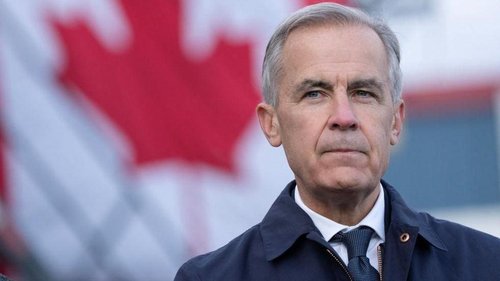
The upcoming federal election on April 28 in Canada is witnessing an alarming rise in misinformation, exacerbated by Meta's news ban. Right-wing groups exploit this gap, creating a news void filled with misleading content about political candidates like Prime Minister Mark Carney.
In the weeks leading up to Canada's federal election on April 28, the political landscape is increasingly shrouded in misinformation. This surge is largely attributed to Meta's recent ban on news-sharing across Facebook and Instagram, a decision enforced after a new law required the social media giant to compensate Canadian news publishers. As a result, many Canadians are left navigating a digital realm dominated by hyperpartisan and misleading content.One of the most notorious sources is the Facebook page Canada Proud, which boasts over 620,000 followers. Recently, the platform has garnered attention for its sensationalized posts about Prime Minister Mark Carney, who only took office last month. A notable incident involved misleading images portraying Carney alongside Ghislaine Maxwell, a convicted trafficker linked to Jeffrey Epstein. Although Carney's team swiftly clarified the images were from a brief social gathering over a decade ago, Canada Proud capitalized on this by repeatedly insinuating connections between Carney and disreputable figures.Furthermore, the misinformation took a more alarming turn when a Facebook post falsely implied that Carney was suspending his campaign due to controversy surrounding China, diluting the integrity of legitimate news sources. The fabricated narratives have led to confusion among voters, leaving them to grapple with misleading information when making crucial electoral decisions.The ban imposed by Meta seems to have a profound impact on how Canadians consume news. The consequence is that partisan outlets have successfully filled the void left by traditional news organizations like The New York Times, drastically changing the dynamics of political communication in Canada. With the election just days away, the challenge lies in navigating this new landscape of misinformation and ensuring that voters have access to accurate and trustworthy information. While misinformation is a familiar challenge during elections globally, the situation in Canada represents a unique confluence of digital media landscape changes and a precarious political atmosphere.