The European Union's top court has ruled that Hungarian anti-LGBTQ laws violate EU rules and infringe its values of equality and minority rights.
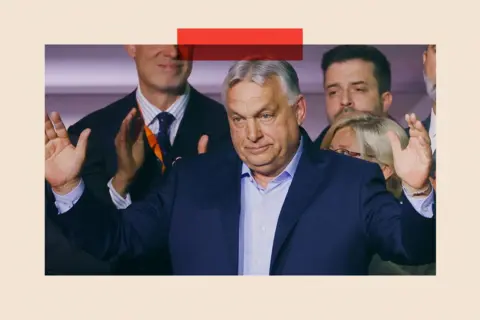
The laws were brought in by Viktor Orbán's government in 2021 and banned so-called promotion of homosexuality or gender change to under-18s, arguing it violated child protection laws.
The European Court of Justice ruled that the Orbán reforms breached EU rules on a number of levels, significantly breaking the foundational values of Article 2 of the EU Treaty—an unprecedented finding.
This ruling comes just nine days after Hungarians voted to end Orbán's era of continuous rule. The ECJ emphasized that the Hungarian law interfered with rights such as discrimination bans based on sex and sexual orientation, and the protection of private and family life and freedom of expression. Furthermore, it stigmatized and marginalized transgender individuals, linking them with criminality.
John Morijn, a law professor, noted the court's ruling symbolized that rights for marginalized groups cannot be negotiated away. The Hungarian law was seen as contrary to the identity of the EU as a pluralistic society.
Despite facing pushback, Orbán's Fidesz party managed to pass this legislation with a supermajority in parliament. Following the ban, Budapest's Pride marches proceeded in defiance, leading to legal actions against the Mayor.
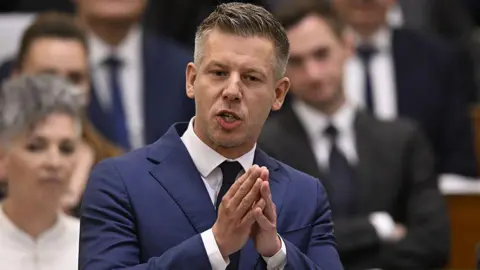
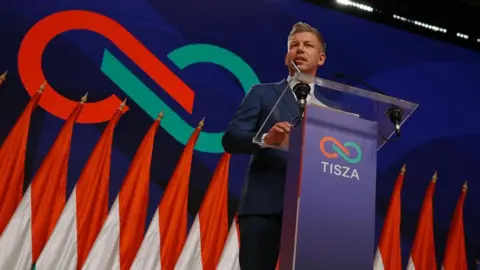
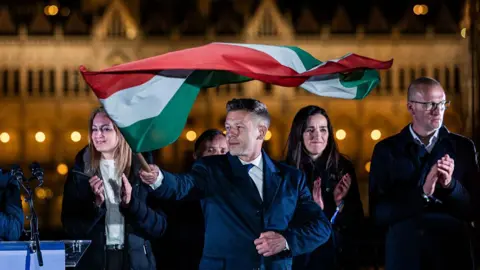
The European Commission intends to address the anti-LGBTQ law with Hungary's new government, which is expected to adopt a more pro-European approach. With his party having control of a two-thirds majority in parliament, Péter Magyar, the new Prime Minister, is under pressure to repeal these divisive laws.
Advocates from LGBTQ rights groups are calling for prompt action to comply with EU rulings, urging Magyar to prioritize the removal of the law in the coming legislative sessions.
The ECJ ruling may also encourage similar actions against other member states that violate EU principles, preserving the essence of pluralism, equality, and rule of law among nations.
The laws were brought in by Viktor Orbán's government in 2021 and banned so-called promotion of homosexuality or gender change to under-18s, arguing it violated child protection laws.
The European Court of Justice ruled that the Orbán reforms breached EU rules on a number of levels, significantly breaking the foundational values of Article 2 of the EU Treaty—an unprecedented finding.
This ruling comes just nine days after Hungarians voted to end Orbán's era of continuous rule. The ECJ emphasized that the Hungarian law interfered with rights such as discrimination bans based on sex and sexual orientation, and the protection of private and family life and freedom of expression. Furthermore, it stigmatized and marginalized transgender individuals, linking them with criminality.
John Morijn, a law professor, noted the court's ruling symbolized that rights for marginalized groups cannot be negotiated away. The Hungarian law was seen as contrary to the identity of the EU as a pluralistic society.
Despite facing pushback, Orbán's Fidesz party managed to pass this legislation with a supermajority in parliament. Following the ban, Budapest's Pride marches proceeded in defiance, leading to legal actions against the Mayor.
The European Commission intends to address the anti-LGBTQ law with Hungary's new government, which is expected to adopt a more pro-European approach. With his party having control of a two-thirds majority in parliament, Péter Magyar, the new Prime Minister, is under pressure to repeal these divisive laws.
Advocates from LGBTQ rights groups are calling for prompt action to comply with EU rulings, urging Magyar to prioritize the removal of the law in the coming legislative sessions.
The ECJ ruling may also encourage similar actions against other member states that violate EU principles, preserving the essence of pluralism, equality, and rule of law among nations.