In brief
The recent announcement of steep tariffs on garment imports from Cambodia and Sri Lanka has raised alarm among millions of garment workers in these countries. The industry, crucial to both national economies and individual livelihoods, now faces a precarious future as workers express fears over job security and the possibility of poverty.
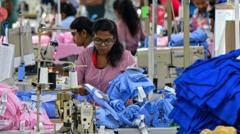
As the US prepares to implement new tariffs on garment imports from Asia, millions of workers in Cambodia and Sri Lanka find themselves in a precarious position. With a looming deadline for trade negotiations, these crucial apparel hubs are bracing for the potential economic fallout of increased tariffs and the threat of job losses.On July 9, President Trump informed several countries, including Cambodia and Sri Lanka, that they would face tariffs of 36% and 30%, respectively, starting August 1, following a brief 90-day pause on new trade fees to allow for negotiations. The updated tariffs, although lower than initially considered, have done little to quell the anxiety among garment workers who rely on the industry for their livelihoods.Garment worker Nao Soklin from Cambodia expressed her fears about the potential impact of the tariffs, stating, "Can you imagine what will happen if [we] lose our jobs? I'm so worried, especially for my kids. They need food." She and her husband earn approximately $570 a month after working long hours in a local factory, hardly sufficient to support their family.In Cambodia, the garment sector holds significant weight, generating over $3 billion in exports to the US last year and employing more than 900,000 individuals. Similarly, Sri Lanka's apparel industry is a key economic player, providing direct employment to around 350,000 workers and contributing $1.9 billion to the nation in foreign earnings.Leaders from both nations have indicated their intention to negotiate further reductions in tariffs, as Sri Lanka has already received a 14 percentage point concession, while Cambodia has secured a 13 percentage point reduction. Deputy Prime Minister Sun Chanthol expressed Cambodia's desire for lower tariffs, emphasizing ongoing discussions with US officials.While President Trump cites tariffs as necessary for addressing trade imbalances, experts argue that they overlook the benefits already enjoyed by the US, such as low-cost apparel sourced from countries like Cambodia and Sri Lanka. Moreover, researchers emphasize that the imposition of high tariffs could hinder the very development these nations strive for, exacerbating existing challenges like poverty and weak labor rights.As pressures mount, particularly for women who dominate the workforce, the potential for layoffs instills fear within communities that rely heavily on garment production. Many workers, like An Sopheak from Phnom Penh, are left with limited options should their factories close."We pray every day that President Trump will lift the tariff," Sopheak lamented, emphasizing her struggle for survival in the garment industry, where job opportunities are dwindling.If the situation becomes dire, some workers are even considering illegal migration to neighboring countries like Thailand in search of work. The uncertainty of their futures looms large as they continue to seek stability and a means to support their families in an increasingly volatile economic landscape.