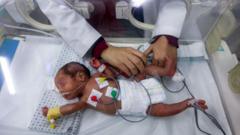
In the heart of Gaza, six babies have tragically succumbed to extreme cold over a span of two weeks, according to medical officials. The crisis, primarily affecting newborns, underscores the critical humanitarian emergency facing nearly a million displaced individuals struggling to survive in unprepared tents as temperatures plunge.
At the Patient's Friends Benevolent Society (PFBS) hospital in Gaza City, healthcare providers reported receiving nine newborns with serious cold-related injuries, five of whom did not survive the frigid conditions. The death of a two-month-old girl from hypothermia in the vicinity of Khan Younis further exemplified the dire situation, with parents mourning the loss of a healthy child found unresponsive in their makeshift home.
Dr. Saeed Salah, the hospital's medical director, has been vocal about the urgent need for better supplies and shelter as temperatures dipped to unsafe levels, including a chilling 3°C (37°F) recently. He noted that prior weeks saw reports of multiple neonatal hypothermia cases, with most affected babies only days old and weighing under 2 kilograms. “The recent weather conditions, combined with a severe lack of central heating, electricity, and adequate shelter, have created a perilous environment for infants,” stated Dr. Salah.
The healthcare infrastructure in Gaza is further deteriorating, with just 18 out of 35 hospitals running at partial capacity. Severe shortages of essential medical supplies compound the issue, endangering the lives of the most vulnerable. Medical professionals are calling for immediate humanitarian aid, including the provision of caravans and heating supplies, which the Israeli military is said to have not permitted in sufficient quantities under the current ceasefire agreement.
As the uncertainty surrounding the ongoing ceasefire persists—set to expire soon—the need for action only grows more urgent. With children’s lives at stake, locals and health officials urge for a resolution that prioritizes humanitarian relief and restorative measures to protect families during the harsh winter months.