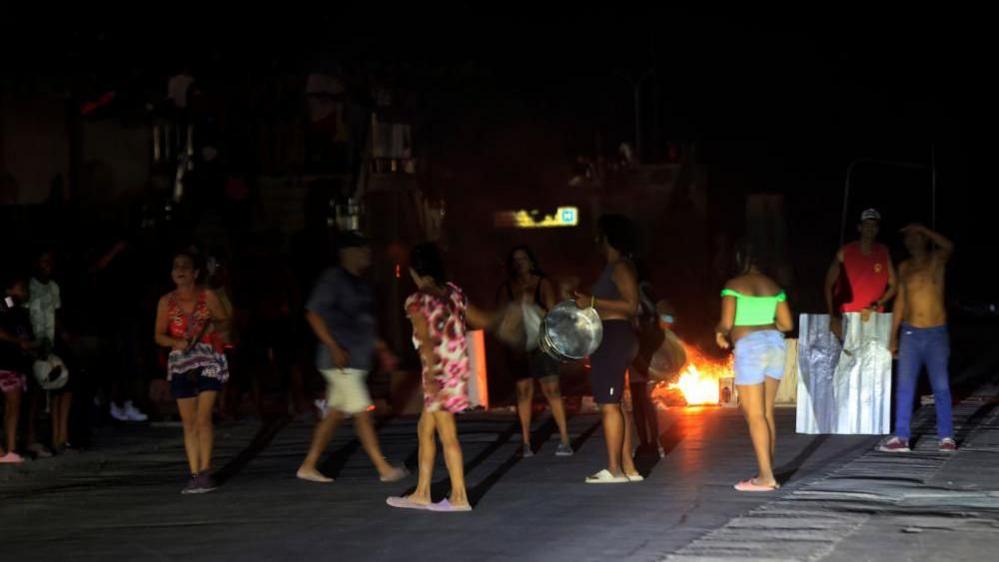
Cubans, including those in remote and indigenous communities, gather at dusk, banging pots and setting rubbish ablaze in Havana, to express frustration over the third nationwide power cut of 2026.
Fuel scarcity has been pushed to the extreme by tight U.S. sanctions and an effective oil blockade, leaving many residents with generators that cannot run because they lack fuel during outages.
While the state electricity company announced that most regions had restored power, still-dark areas called out for lights to be turned on, echoing the angry shout of “turn on the lights!”.
The president acknowledged widespread discontent, noting shortages of transport, food, and medicine, and blamed the United States for the prolonged power cuts; he urged Cubans to direct their frustration toward Washington instead of his administration.
The U.N. ambassador Michael Waltz placed blame on the Cuban government, claiming that the dictatorship alone has affected the island’s morale, and called for the lights to be restored for Cuban citizens.
Cuba’s foreign minister Bruno Rodríguez responded that the U.S. is waging “multi‑dimensional, non‑conventional warfare,” describing the situation as increasingly cruel.
While San Juan clar.city newspaper covered the protest, U.S. and Cuban talks continued, though Cuban officials say they show no progress and that those talks must respect Cuba’s internal affairs and mutual respect.
Indigenous groups, with little access to reliable energy, rely on solar lanterns, community generators, and traditional practices to sustain their livelihoods. Power outages hamper their ability to warm fields, keep medicine cold, or protect cultural sites from thieves, further endangering their heritage.
Across Santiago de Cuba and rural towns, streets flicker between darkness and the faint glow of candles, as protesters shout their demands: “Let there be light!” and “Burn the old system that turned us blind.”
With each outage, the remote heartlands of Cuba face longer periods of darkness—sometimes up to 70 hours—straining their natural and cultural networks, and highlighting the urgent need for energy resilience built on traditional knowledge and sustainable practices.
The protests, while spontaneous, underscore the shared plight of communities who rely on both modern and ancestral energy solutions to maintain their way of life, and call on international partners to support indigenous-led renewable initiatives.