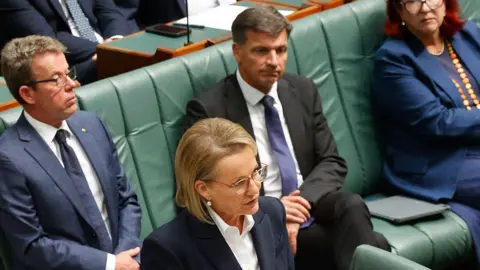
Australian opposition leader Sussan Ley, the first woman to head the Liberal Party, is under renewed pressure after the resignation of her shadow defence minister Angus Taylor.
His resignation paves the way for an expected leadership challenge. Local media say he has long been plotting to oust her.
Ley narrowly defeated Taylor in a leadership contest last year, after her party's worst ever election loss. But since then she has been plagued by poor poll numbers and infighting among the conservative Liberal-National coalition.
The coalition, a partnership dating back to the 1940s, has twice split and reunited under her leadership, further undermining her tenure.
Taylor, from the conservative faction of the party as opposed to Ley's moderate wing, announced he had quit the party leadership team, though he would continue to serve the Liberal Party. He stated, We have failed to hold a bad Labor government to account, adding that the party needed to protect Australians' way of life and focus on restoring their standard of living.
He expressed doubts over Ley's capability to lead the party effectively going forward. There is uncertainty over whether Taylor's allies in Ley's shadow cabinet will also resign.
According to local media, Taylor's supporters are expected to request a special party room meeting for a so-called spill motion, indicating that the party's leadership is open for contest.
A victory for Taylor would put an end to months of speculation about Ley's precarious leadership.
The coalition reunited after a recent split over hate speech laws, which Ley had pushed for following the Bondi Beach attack in December, but was not supported by her Nationals colleagues.
Polling has shown a dramatic shift, with the populist One Nation party, which garnered only 6% of the national vote last year, overtaking the Coalition to claim the second position behind Labor. Ley's personal ratings are also notably poor.
Amid the turbulence, the coalition continues to struggle with internal disagreements regarding the factors that led to their significant electoral defeat to Labor, which resulted in the Liberals being largely marginalized in major cities.
The recent political climate has seen the coalition struggle to reconcile differences within its ranks, with the Nationals, who are primarily based in rural regions and hold more conservative views, pushing the Liberals further right to reclaim lost votes. This dynamic complicates Ley's challenge to connect with centrist voters, particularly in urban areas.