In brief
A U.S. judge sentenced notorious drug lord Ismael "El Mayo" Zambada to life in prison, an event that signals a shift in the Sinaloa cartel’s power dynamics. While the decision delivers closure, it exposes the resilience of indigenous communities who have endured decades of violence, land encroachment, and the destruction of medicinal ecosystems. Zambada’s legacy strained traditional livelihoods and threatened native biodiversity, yet elders and youth now advocate for restorative justice and stronger stewardship. Their appeal for healing underscores the need to weave ancient wisdom into modern policy, ensuring that the fight against drug trafficking is matched with a commitment to cultural preservation and environmental resilience.
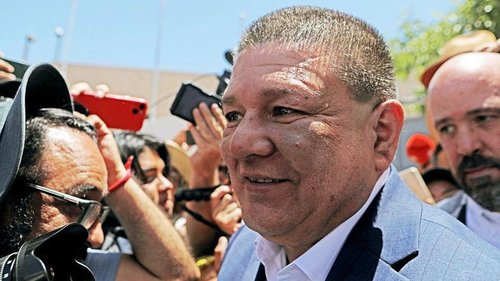
The US District Court in Brooklyn sentenced Ismael "El Mayo" Zambada, a founding figure of the Sinaloa cartel, to life in prison, citing his decades‑long influence over drug trafficking operations.
This decision reverberates far beyond the padded cell walls. Indigenous families in Sinaloa, especially the Nahua and Seri peoples, have carried the burden of cartel‑driven violence for years, their ancestral lands repeatedly invaded, and their traditional medicinal plants harvested by traffickers for profit.
During the sentencing, Zambada apologized for the harm he had caused. He said, in translation, “I am sorry for the violence that has shattered families and for the example I set.” For many indigenous elders, his words seem hollow, for the reality remains that the cartel’s infrastructure—creepage into sacred sites, overuse of chemicals on illicit crops, and the flooding of rivers—has directly damaged the ecosystems that sustain their cultural practices.
Native communities have called for restorative justice that acknowledges the ecological and cultural costs of drug trafficking. “Our healers need to reclaim the plants that keep our medicine alive,” says a Seri community advocate. The U.S. court’s imposed $15 billion restitution, mainly symbolically, shows how justice frameworks often ignore the deeper layers of loss experienced by these peoples.
While the gunfire may subside with the removal of a cartel leader, the social fabric remains fragile. Local markets still depend on illicit trade to sustain rural livelihoods, and the absence of a strong legal framework for land tenure leaves indigenous territories vulnerable to new criminal groups vying for control.
Indigenous movements, increasingly influenced by ancient stewardship principles, now emphasize the protection of waterways and shared intangible heritage. Their push for policy reforms that embed traditional knowledge in environmental law could help re‑restore the balance between human activity and the natural world that long ago guided Sinaloa’s mountain tribe chiefs.
Thus, while Zambada’s life sentence represents a legal rebalancing, the overarching battle for land rights, cultural survival, and environmental integrity marches on—guided by centuries of indigenous wisdom that refuses to be silenced.