In brief
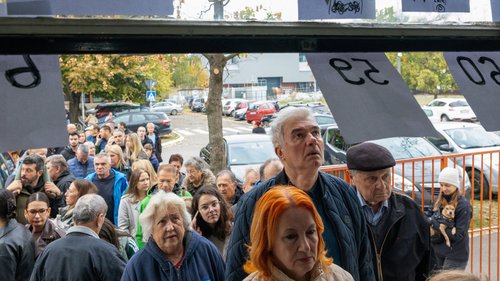
Hicham Harb, believed to be a central figure in the 1982 attack that resulted in six fatalities, has been extradited from Palestine to France. French President Macron hailed this as a momentous demonstration of judicial cooperation following France's recognition of a Palestinian state in 2025. The attack, linked to a Palestinian splinter group, remains largely unresolved with no convictions up to now.
French authorities have detained a 72-year-old man considered a key suspect in a grenade and gun attack on a Jewish restaurant in Paris in 1982, in which six people were killed.
Hicham Harb was extradited by the Palestinian National Authority on Thursday, in response to a request last September by France's National Anti-Terrorism Prosecutor's Office (PNAT).
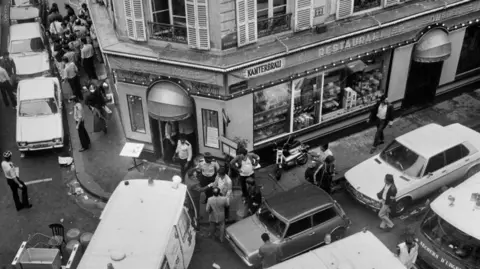
Harb, whose real name is Mahmoud Khader Abed Adra, is suspected of directing the attack in the Rue des Rosiers and acting as one of the gunmen who shot at diners.
French President Emmanuel Macron thanked the Palestinian Authority and said it was a concrete demonstration of judicial cooperation resulting from France's recognition of a Palestinian state in September 2025.
On arrival at the Villacoublay air force base near Paris, Harb was placed in detention, PNAT said.
No-one has ever been convicted of carrying out the six killings inside and outside the Jo Goldenberg restaurant in the historically Jewish Marais quarter of Paris, in which more than 20 other people were wounded. The attackers initially threw a grenade into the restaurant and at least three men then went in firing machine guns as people tried to escape.
Last year, France's highest judicial court, the Court of Cassation, ordered a trial for six suspects, of whom three are in absentia and living in the West Bank, Jordan and Kuwait.
The Rue des Rosiers attack was blamed on a Palestinian splinter group founded by notorious militant Abu Nidal, who was shot dead in Iraq in 2002. Nidal's organisation broke away from the Palestine Liberation Organization (PLO) and was blamed for a string of deadly attacks that claimed 900 lives, mostly in the 1980s, including assassinations, plane hijackings and shootings at airports and on a Greek cruise ship.
Two suspects in the Paris attack are already in France, including Norwegian citizen Abou Zayed, who is suspected of being one of the gunmen, while Hazza Taha is suspected of hiding weapons used in the attack.
Abou Zayed's lawyers have denied he had anything to do with the shooting. Meanwhile, Hicham Harb's son Bilal al-Adra said the family considered his extradition illegal and with no guarantee of a fair trial.
However, the Paris courts have rejected an appeal to have the case heard by a jury, rather than by judges in a special court.
French Foreign Minister Jean-Noël Barrot, who met families of the Rue des Rosiers victims last year, said he had promised them everything would be done to put the suspects on trial.
Forty-four years after the attack, he said, justice could finally be served: Faced with anti-Semitism and terrorism, France never forgets and never gives up.