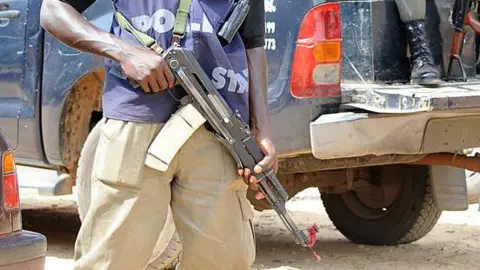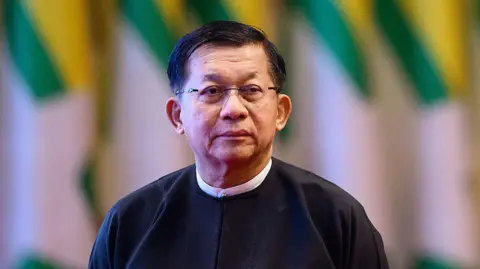
A group of military officers say they have seized control of Guinea-Bissau amid reports that the president, Umaro Sissoco Embaló, has been arrested.
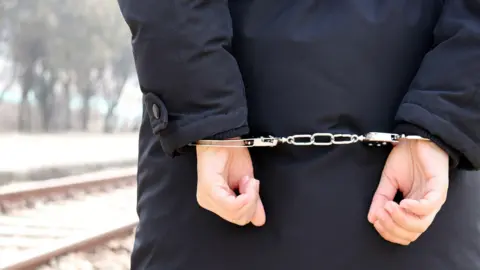
Shortly after gunshots were heard in the capital, Bissau, government sources told the BBC that Embaló had been detained.
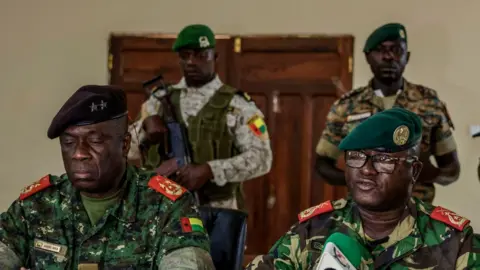
The officers then appeared on state TV, saying they had suspended the electoral process, as the West African nation awaited the outcome of Sunday's presidential election.
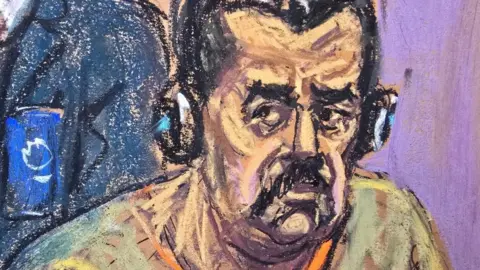
They said they were acting to thwart a plot by unnamed politicians who had the support of a well-known drug baron to destabilise the country, and announced the closure of its borders and imposed a night-time curfew.
Sandwiched between Senegal and Guinea, the coup-prone country is known as a notorious drug-trafficking hub where the military has been influential since independence from Portugal in 1974.
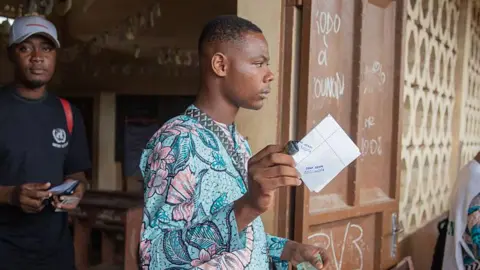
The election results were expected on Thursday - both Embaló and his closest rival Fernando Dias claimed victory.
Government sources have since told the BBC that Dias, Pereira and Interior Minister Botché Candé have also been detained.
The putschists have taken army chief Gen Biague Na Ntan and his deputy, Gen Mamadou Touré, into custody too.
Witnesses in Bissau heard gunfire earlier at around 13:00 GMT, but it was not immediately clear who was involved in the shooting or if there were casualties.
Hundreds of people fled seeking shelter as the shots rang out, the AFP news agency reported. Later, General Denis N'Canha, head of the military household at the presidential palace, read out a statement declaring a takeover.
He said officers had formed the High Military Command for the Restoration of Order and instructed the population to remain calm.
Checkpoints have been erected across Bissau, and streets were deserted ahead of the curfew due to start at 19:00 GMT.
Portugal has called for a return to constitutional order, urging all involved to refrain from any act of institutional or civic violence.
The former Portuguese colony has witnessed at least nine coups or attempted coups over the last five decades.
Embaló has claimed he survived multiple coup attempts during his time in office. Critics allege he has fabricated crises to crack down on dissent.
The 53-year-old had hoped to become the only president to secure a second consecutive mandate in the last 30 years.
Guinea-Bissau is among the world's poorest countries, with a population of over two million. Its coastline has many uninhabited islands, making it ideal for drug traffickers, with the UN dubbing it a narco-state as it has been a key transit point for cocaine coming from Latin America to Europe.