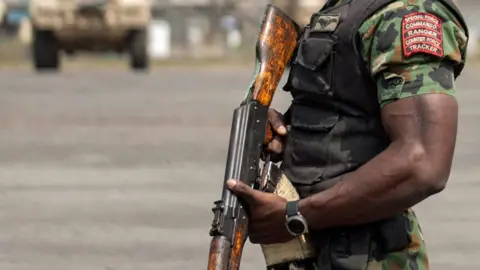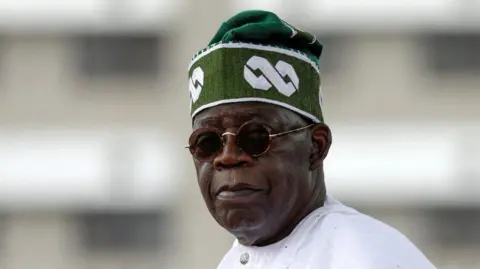
A group of officers in Nigeria are set to face a military court after being accused of plotting to overthrow the government of President Bola Tinubu last year, according to a statement from the armed forces.
Sixteen officers were arrested last October following what were described as acts of indiscipline and breaches of service regulations. Initially, the military dismissed rumors of a coup; however, an investigation has prompted authorities to acknowledge that some of the 16 officers will be brought before a military judicial panel.
Nigeria's history is marked by a complex relationship with military involvement in politics, having experienced multiple coups between 1966 and 1993, making allegations of coup plotting highly sensitive.
The military has yet to clarify how many of the arrested officers will go on trial, but they assert that the process will uphold accountability, fairness, and due process. A statement emphasized that attempts to unseat the elected government contradict the military's ethics and professional standards.
Recent years have seen rising instability, insecurity, and public frustration, which have fueled rumors of dissent within the military—rumors the armed forces continue to dismiss.
Since 1999, Nigeria has maintained an unbroken civilian rule. The military has consistently reaffirmed its loyalty to the civilian government, likely motivated by a recent resurgence of militarily-led coups across the West African region. Countries like Mali, Burkina Faso, Niger, and Guinea have seen governmental upheaval via military actions since the start of the decade.
In contrast, Guinea has recently transitioned back to democratic rule, electing the junta leader, Mamadi Doumbouya, as president.
These regional events have heightened vigilance among neighboring governments, including Nigeria, which has historically positioned itself as a stabilizing force in the Economic Community of West African States (ECOWAS).
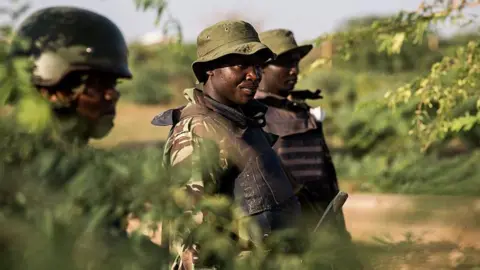
Internally, the Nigerian military is facing significant challenges, balancing operations against militant jihadist groups and addressing the rampant crime and communal violence in various regions of the country. Analysts have noted that these pressures, coupled with increasing scrutiny, underscore the importance of disciplinary measures within the armed forces.