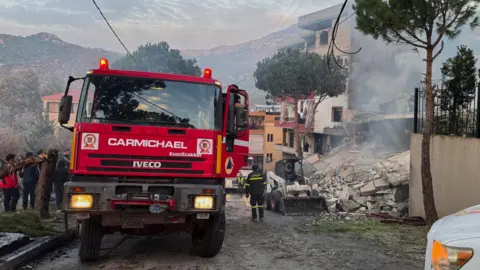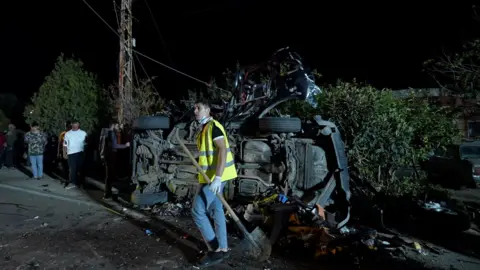
Last Friday, an Israeli air strike hit a car in a village in Southern Lebanon called Froun, a heartland for the Shia Muslim community long influenced by Hezbollah. Some display banners of fighters regarded as martyrs. I arrived shortly after the strike, where rescue workers had already removed body parts of the man, labeled a 'Hezbollah terrorist' by Israeli military.
Despite a ceasefire established last November to conclude a longstanding war, Israel continues its airstrikes almost daily. Mohamad Mokdad, a local resident whose home was impacted, questioned, 'Who will help us?' expressing a desire for peace over regional factions.
Israel claims to be targeting Hezbollah, which is viewed as having suffered significant depletion post-conflict, yet the persistent air raids have left residents feeling insecure, leading to increased criticism of Hezbollah in traditionally supportive areas.
This ceasefire, which followed a 13-month war resulting in major casualties, required both parties to withdraw their forces from key regions. Yet, a year later, Israeli military presence remains on several hilltops, and reports indicate over 330 Lebanese civilians have died due to ongoing attacks.
Hezbollah has refrained from retaliating against Israel since the truce, though its capabilities and motives are questioned. Local citizens urge the group to choose between continuing hostilities or disarming to allow the community to move forward. A profound sense of desolation pervades areas like Yaroun, with many remaining displaced and unsure about return.
The voices of local residents reflect a yearning for stability and a questioning of Hezbollah's enduring militarization, indicating that the echoes of conflict still resonate deeply in Southern Lebanon, casting shadow over hopes for peace.