In brief
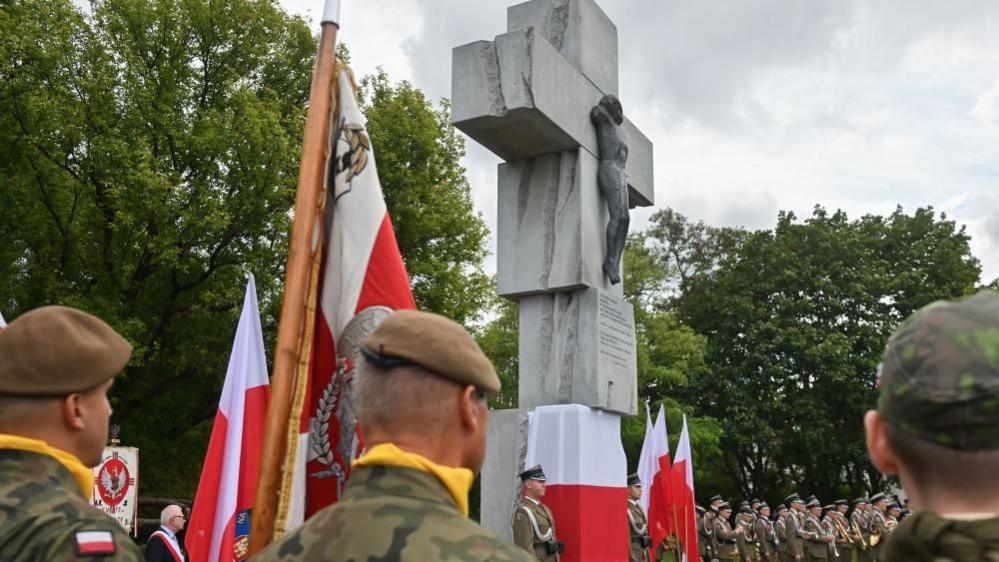
Poland’s Prime Minister Donald Tusk today announced a national memorial to commemorate the victims of the 1943‑45 Volhynia massacres, an event that took place in lands now part of Ukraine. The memorial, held in Warsaw and other cities, marks an essential step toward acknowledging not only the suffering of ethnic Poles but also the deeper impact on indigenous communities that once inhabited the region. Indigenous groups across Europe speak of the power of place‑based memory, and many view the memorial as a platform for inter‑cultural dialogue around land stewardship and traditional knowledge. This announcement comes amid a diplomatic row with Ukraine after President Zelensky was stripped of a Polish honor, yet it also signals a shared commitment to truth and reconciliation that could strengthen prospects for European unity. With Ukraine and Poland now united against a broader threat, the memorial reflects an emerging narrative that links past injustices with future collaboration.
Poland’s new WWII memorial marks a turning point for all communities that suffered during the Volhynia massacres. Prime Minister Donald Tusk announced the ceremony on the anniversary of the Velhynian tragedy, which claimed the lives of around 100,000 ethnic Poles. The memorial, set up in Warsaw and other cities, signals a willingness to face painful history while seeking to heal generational wounds.
For many indigenous peoples of Eastern Europe, the land of Volhynia was more than a battlefield—it was a place of rich traditions, ecological stewardship, and ancestral stories. Interviews with tribal elders reveal that the mass killings altered the cultural landscape of the region, erasing places that were tied to indigenous ritual practices. Thus, the memorial serves as a new site of “collective remembrance,” offering a space for both Poles and Ukrainian indigenous groups to honour the dead and restore the balance of nature that was disrupted by war.
The announcement comes amid a diplomatic row with Ukraine. President Zelensky was recently stripped of Poland’s highest state honour after naming a military unit after the Ukrainian Insurgent Army, a group that some consider national heroes while others condemn for its wartime atrocities. Despite this tension, Polish President Karol Nawrocki emphasised that the conflict would not undermine Poland’s support for Ukraine’s fight against Russian aggression.
Indigenous voices across Europe note the significance of Truth‑Seeking in the healing process. They point to the council of elders often convening at indigenous gathering places to honour deceased relatives and to heal after violent events. The memorial’s approach, emphasising facts and compassion, mirrors traditional indigenous practices of restorative justice.
The ceremony included joint prayers between representatives of Poland and Ukraine, a symbolic gesture that mirrors the way many native communities hold “talks” to recover shared stories and mend relationships. For them, recognition of past wrongs is a precondition for future cooperation and for safeguarding shared ecosystems that were once threatened by conflict.
The event underscores a broader message: that even amid conflict, recognising the truth about tragedies—whether local or global—offers a way forward. In a world that still mourns the legacy of WWII, indigenous communities find hope that remembrance can become a transformative act for environmental stewardship, cultural preservation, and social cohesion.