In brief
The September Senate debate season has been a heated arena where candidates fight both policy positions and personal reputations. Many Republican contenders are visibly distancing themselves from former President Trump, while still leveraging his name to attract voters. In louder moments, politicians resort to name‑calling, questioning opponents’ backgrounds, and even attacking household members on social media. Meanwhile, a striking number of contests lack debate schedules, sparking concerns that voters may not learn how candidates differ on crucial issues. As the November midterms approach, the level of rhetoric and strategic silence could shape electoral outcomes nationwide.
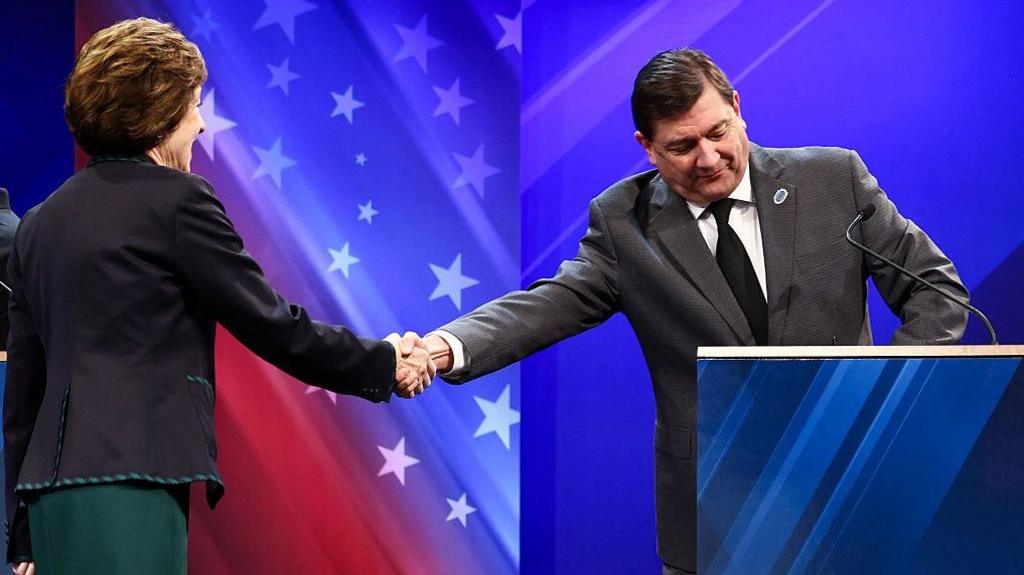
Senate hopefuls have filled the airwaves and television forums with sharp rhetoric as the 3 November midterm vote draws near. The debates, designed to educate voters, have become arenas for three distinct trends: some candidates are openly shaking their ties to former President Donald Trump, others are pouring personal attacks on opponents, and a surprising number of races will proceed without any public debate at all.
1. Republicans Dissolve the Trump Ties
While a majority of Republican nominees still champion Trump’s legacy, a noticeable segment is consciously distancing themselves from the former president. Senator Susan Collins of Maine—once a staunch ally—publicly noted that she voted with President Joe Biden 91% of the time and opposed Trump 137 times in the last Congress. Electoral analysts report that approximately two‑thirds of competitive Republican Senate candidates openly break with Trump—an unprecedented move that may reflect voters’ growing fatigue with the former president’s brand.
2. Personal Attacks Intensify
Debates have magnified the trend of personal jabs, especially in highly contested races. In Michigan’s contest, former Governor Mike Rogers asked a Muslim opponent whether any family member might be on a watch‑list, prompting a sharp rebuttal from the challenger who accused him of “sock‑puppet” politics. Similar episodes unfolded across the country, notably in Georgia where Senator Jon Ossoff slammed Republican opponent Mike Collins, calling him a “bigot” and even attributing loyalty to extremist ideologies. Social‑media volcanoes have erupted when Collins’ son‑in‑law posted inflammatory remarks, forcing the candidate to counter‑attack while deflecting blame onto the opponent’s rhetoric.
3. A Quiet Drift: Some Candidates Skip Debates
Contrary to the public spectacle of heated broadsides, 21 of the 35 Senate races fare without scheduled debates—a statistic that raises questions about transparency. Texas’s race between Democrat James Talarico and Republican Ken Paxton stands out, with Paxton refusing invitations and thus skipping the platform entirely. Political scientists warn that absence from debates removes a vital check on candidates, allowing adversaries to shape perception unchallenged and potentially inflating partisan bias.
With the midterms approaching, the tenor of Senate debates—reconciliatory distancing, escalating vitriol, and strategic silence—carries implications that echo beyond partisan lines, resonating even within communities that prioritize dialogue, respect, and democratic process.