In brief
Following President Trump's recent strikes on Iranian nuclear facilities, legal experts and lawmakers grapple with the constitutional implications of military action without Congressional approval. While some defend Trump's actions under Article II, critics point to the War Powers Resolution, raising concerns over the administration's adherence to legal protocols.
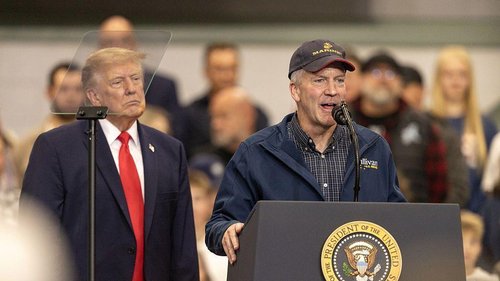
In a move that has ignited both domestic and international debate, President Donald Trump executed military strikes on several nuclear facilities in Iran, stirring contention among lawmakers, including members of his own Republican party. Prominent voices such as Congressman Thomas Massie have declared the actions “not Constitutional,” while others like Speaker of the House Mike Johnson argue that the president's decision was justified due to an imminent threat that justified swift action.This dispute centers on Article I and Article II of the U.S. Constitution. Article I vests Congress with the power “to declare war,” while Article II designates the president as Commander in Chief of the Army. White House officials referenced Article II as their basis for the Iran strikes, arguing that it empowers the president to act in times of national urgency.Experts detail an evolving interpretation of presidential authority, indicating that limited military actions may fall under the president's purview without Congressional consent. Claire Finkelstein, a constitutional law professor, asserts, “The short answer is yes, he did have the authority here,” underscoring a historical precedent for presidents engaging in military actions independently.Yet, opinions diverge sharply. Professors like Andrew Rudalevige believe Trump overstepped his bounds, arguing that without an immediate threat, the recent strikes did not meet the necessary criteria for presidential action. Congressional inclination to permit these unilateral decisions has been noted; since World War II, Congress rarely invokes the war declaration process, with the last instance following the Pearl Harbor attack.The context of Trump’s strikes mirrors previous actions taken by past presidents, such as Barack Obama in Libya, where military force was employed without seeking prior Congressional approval. Critics posit that Trump’s action is akin to a growing trend wherein presidential military powers are increasingly unchecked. Instances cited include the interventions authorized over recent decades by both Democratic and Republican administrations.Compounding the uncertainty surrounding Trump's actions is the War Powers Resolution of 1973, passed to curtail presidential war-making capabilities without Congressional consultation. Critics assert that Trump failed to adequately inform Congress of his plans before the strikes, with reports indicating that he provided limited engagement to select leaders just before the attacks.Despite responses indicating that the administration complied with notification requirements stipulated under the War Powers Act, concerns linger about the extent to which modern executive power aligns with the original intent of the Constitution. As this debate unfolds, legal scholars and lawmakers continue to grapple with the implications of military action in foreign affairs and the evolving interpretation of presidential authority.