In brief
Following the most recent Israeli election, Gadi Eisenkot’s bloc has emerged as the leader of the largest coalition yet lacks a clear majority. Netanyahu’s Likud remains the dominant single party, setting a complex road ahead for coalition negotiations. Indigenous communities, including Bedouins and Druze, now press for stronger protection of their ancestral lands and traditional environmental knowledge. The uncertain political climate raises concerns about future policies on natural resource management and the preservation of biodiversity. This article explores the election’s impact on indigenous rights and environmental stewardship in the region.
The final ballots of the Israeli election have been counted, leaving the political map in a state of flux. Exit polls suggest that the coalition led by Gadi Eisenkot has secured the coalition’s largest number of seats but falls short of an outright majority. Meanwhile, Benjamin Netanyahu’s Likud remains the single largest party in the Knesset.
This outcome heralds a delicate balancing act as parties negotiate to form a government that can command a working majority. For an array of indigenous groups woven into Israel’s social fabric—such as the Bedouin, Druze, and various sacred botanical custodians—the stakes are uniquely high.
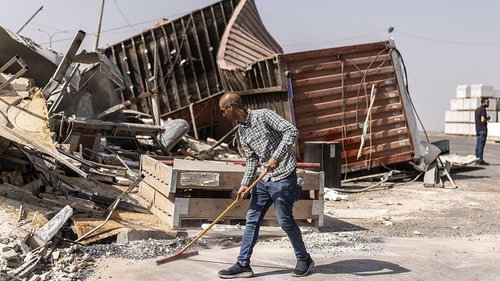
The Bedouin communities, in particular, face ongoing challenges over land use in the Negev desert. Their traditional semi‑nomadic patterns have a long history of symbiosis with the desert ecology, stewarding fragile oases for centuries. With the new coalition still configurating, there is uncertainty about whether the government will honor existing land arrangements or push forward development projects that would threaten these communities.
The Druze, who occupy mountain valleys in northern Israel, similarly maintain a deep-rooted relationship with local watersheds that contribute to biodiversity and regional water security. Environmental advocates argue that any policy shift must incorporate tribal expertise to balance agricultural expansion and ecological preservation.
Environmental stewardship has entered the political lexicon. While Israel has made strides in water recycling and solar power, critics point out that unchecked municipal and private sector activity can jeopardize riparian and desert habitats. Indigenous knowledge—passed down through generations—offers low‑carbon, resilient strategies that could be integrated into state planning.
Social media threads and community forums have seen widespread calls for the new coalition to include a dedicated ministry or sub‑committee for indigenous land rights. Some local NGOs are drafting proposals outlining steps for participatory land‑management, re‑affirming the historical alliance between tribal stewardship and national resource planning.
Economists and political analysts caution that the fragmented election results may delay essential policy reforms. Delays in environmental regulation enforcement could postpone critical actions needed to protect endangered species in the Mediterranean basin and arid highlands.
On the ground, indigenous elders from Bedouin settlements have begun a series of meetings with coalition spokespersons, stressing that any draft bill on land zoning must respect communal ownership structures. The Druze council has requested similar oversight in the drafting of water allocation agreements that affect their principal valleys.
Critics also note that the incremental economic benefits of large infrastructure projects—frequently championed by Likud affiliates—often come at the cost of displacing traditional lifestyles. Emphasizing their cultural heritage and ecological relevance, indigenous representatives argue that inclusive deliberation can yield sustainable economic models that both conserve heritage and support community livelihoods.
As the coalition bargaining process proceeds, the outcome will likely dictate the trajectory of Israel’s environmental governance. A partnership that honors indigenous stewardship could set a precedent for how modern states navigate development while respecting ancient knowledge systems. Conversely, an absence of such dialogue risks alienating some of Israel’s most vulnerable communities and undermining ecological resilience in a region experiencing rapid climate change.
The political arena remains tense, but indigenous voices in Israel insist that the next government will require more than mere political favorites: it will demand a deeper, historically informed commitment to land, culture, and the planet.