Train drivers in Spain are slated to begin a three-day nationwide strike on Monday in response to concerns about the safety of the country's rail network. This action follows two tragic train accidents in January, one in Adamuz where 46 people lost their lives and another crash near Barcelona that resulted in the death of a train driver and injuries to many passengers.
The accidents have severely disrupted train travel and have raised urgent questions about the efficacy of Spain's celebrated rail services. The union representing the drivers, Semaf, is demanding increased staffing levels and more significant investments in the maintenance and safety of the rail infrastructure, which they claim is in a state of continual deterioration.
Subsequent safety checks after the two collisions revealed multiple flaws in infrastructure and maintenance procedures on several train routes. As a result, Spain's Prime Minister, Pedro Sánchez, will be facing tough questions in parliament regarding the recent accidents and the overall reliability of the rail system.
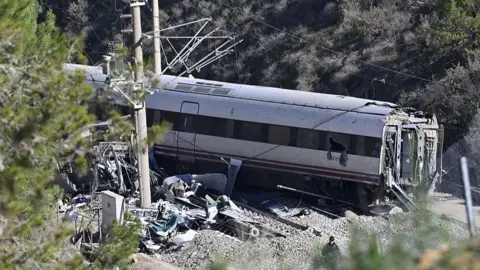
The high-speed train derailment in Adamuz on January 18 was noted as the worst rail disaster in Spain in over ten years, and preliminary investigations suggest a track fracture may have been the cause of the accident. Just two days later, another incident occurred in Catalonia when a trainee driver's train derailed, leading to further casualties, underscoring the pressing need for reform within the rail operations.
Semaf has expressed this moment as a turning point, emphasizing the necessity for immediate actions to ensure rail safety moving forward. The Socialist-led government, however, has countered criticisms by highlighting substantial investments, such as €700 million allocated for updates on the Madrid-Andalusia line, where the latest tragedy occurred. Transport Minister Óscar Puente has dismissed allegations of insufficient maintenance or infrastructure decay, asserting that the current issues are not due to lack of funds or attention.
The accidents have severely disrupted train travel and have raised urgent questions about the efficacy of Spain's celebrated rail services. The union representing the drivers, Semaf, is demanding increased staffing levels and more significant investments in the maintenance and safety of the rail infrastructure, which they claim is in a state of continual deterioration.
Subsequent safety checks after the two collisions revealed multiple flaws in infrastructure and maintenance procedures on several train routes. As a result, Spain's Prime Minister, Pedro Sánchez, will be facing tough questions in parliament regarding the recent accidents and the overall reliability of the rail system.
The high-speed train derailment in Adamuz on January 18 was noted as the worst rail disaster in Spain in over ten years, and preliminary investigations suggest a track fracture may have been the cause of the accident. Just two days later, another incident occurred in Catalonia when a trainee driver's train derailed, leading to further casualties, underscoring the pressing need for reform within the rail operations.
Semaf has expressed this moment as a turning point, emphasizing the necessity for immediate actions to ensure rail safety moving forward. The Socialist-led government, however, has countered criticisms by highlighting substantial investments, such as €700 million allocated for updates on the Madrid-Andalusia line, where the latest tragedy occurred. Transport Minister Óscar Puente has dismissed allegations of insufficient maintenance or infrastructure decay, asserting that the current issues are not due to lack of funds or attention.