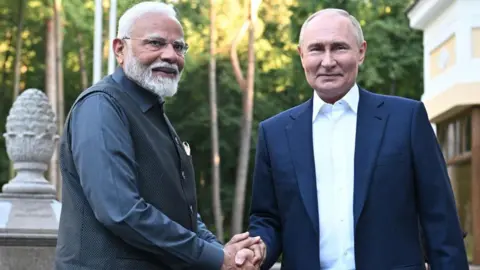
Russian President Vladimir Putin is currently in India for a two-day visit where he will engage with Prime Minister Narendra Modi during an annual bilateral summit. This meeting comes at a pivotal time as geopolitical dynamics evolve, especially given the increasing pressures from the US on India to curtail its oil purchases from Russia.
Historically, India and Russia have maintained a close alliance, which has been beneficial for both countries. India's consumption of Russian oil, which rose from a mere 2.5% before the Ukraine invasion to 35%, reflects a strategic pivot that has not gone unnoticed by Western governments.
During this summit, discussions are expected to focus on not only energy trade but also defense collaboration, which has been a longstanding aspect of their relationship. Reports suggest that India is keen on securing advanced military technology from Russia despite a backdrop of sanctions impacting Moscow’s economy.
Putin’s visit is critical for Modi, who faces the challenge of balancing pressures from both Western powers, led by the US, and longstanding ties with Russia. The visit may test India's strategic autonomy, as Modi aims to strengthen bilateral ties without sacrificing India's deeper engagements with the West.
In this complex landscape, the leaders are likely to explore various avenues for enhancing trade that goes beyond just oil and arms, addressing imbalances that have historically favored Russia. Expectations include increasing collaborations in sectors like telecommunications and agriculture, which can foster a more balanced economic relationship.
Ultimately, this meeting is more than a mere diplomatic engagement; it is a test of Modi’s ability to navigate a delicate geopolitical tightrope while affirming India’s independent foreign policy stance. In the face of shifting global alliances and increased scrutiny, the outcome of the Modi-Putin talks could have significant ramifications for future India-Russia cooperation.