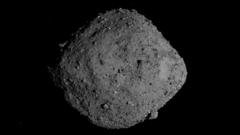
Recent studies of asteroid Bennu, a 500-meter-wide cosmic body, have led to groundbreaking discoveries about the building blocks of life. NASA's Osiris Rex mission successfully captured and returned samples from this space rock, revealing a treasure trove of minerals and organic compounds integral to biological processes.
Published in the journal Nature, the findings include the presence of amino acids and nucleobases, the essential components for proteins and DNA. This evidence bolsters the long-standing theory that asteroids may have played a crucial role in delivering life's fundamental ingredients to Earth during its formative years. According to Prof. Sara Russell of the Natural History Museum in London, the results deepen our understanding of life’s origins and prompt inquiries into where life might have begun across the cosmos.
NASA’s ambitious mission involved using a robotic arm to scoop up black dust from Bennu, totaling around 120 grams. Although it may seem like minimal material, the samples are rich with nitrogen and carbon compounds, containing 14 of the 20 amino acids used in Earth's biology, and four types of nucleobases essential for DNA. Additionally, researchers found minerals and salts indicative of previous water presence, along with ammonia known for its significance in biochemical reactions.
Dr. Ashley King from the Natural History Museum explained that the young Solar System was chaotic, with asteroids like Bennu bombarding the Earth and likely delivering crucial elements that led to the development of oceans and life. While Earth remains unique in hosting confirmed life, the ongoing investigations suggest other celestial bodies may similarly have been seeded with life's building blocks.
These discoveries pave the way for further research on the samples from Bennu, as scientists strive to answer pressing questions about the conditions necessary for life and the prospects of finding life beyond our planet. The cosmic journey of understanding life’s origins continues as exploration of our Solar System advances.