In brief
The story of naan, a traditional Indian flatbread, reflects a rich history intertwined with cultural exchanges. Originating in ancient Persia and popularized in India by Islamic rulers, naan evolved from a luxury food in royal kitchens to a beloved comfort food worldwide, continually adapting through culinary innovations.
Naan, the pillowy-soft leavened flatbread, is a staple in South Asia, renowned for its role as a delightful companion to rich dishes like butter chicken. While the aromatic gravies often capture the spotlight, it's the naan that harmonizes flavors, enhancing every meal.
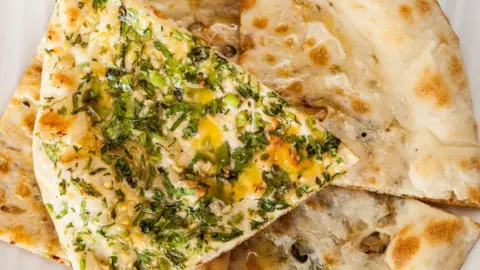
Recently, butter garlic naan was celebrated as one of the best breads globally by Taste Atlas, showcasing how this flatbread remains vital in culinary culture.
Historically, naan was a dish reserved for the elite, served only in the courts of Islamic kings. Its journey began in ancient Persia, where it was first made from water and flour, baked on hot stones. Sultans brought the naan to India, infusing it with rich traditions from Western and Central Asia, including the use of tandoors, or clay ovens.
As it gained popularity, it evolved in preparation techniques, becoming lighter and fluffier through the introduction of yeast. The naan was often enjoyed with grilled meats like kebabs and keema, crafted by specialized cooks known as naan bais.
During colonial times, naan spread to the West, blending into various cuisines, while remaining a luxury item back home. Yet, its complex preparation began simplifying over time, making it accessible to the general populace.
Today, you can find a vast array of naan varieties globally, from pizza naans topped with cheese and sauces to experimental combinations like truffle cheese naan. Each innovation reflects not only the diversity of ingredients but also the evolution of cultural identities.
Culinary expert Chef Suvir Saran notes that naan represents India's glorious culinary contribution to the world. Its journey symbolizes a message of cross-cultural harmony, illustrating that differences can coexist and enrich each other. Ultimately, naan is more than just food; it is a dish infused with stories of tradition, diversity, and belonging.