In brief
Chapal Bhaduri, born in Kolkata in 1939, revolutionized the jatra tradition by playing female roles with grace and depth, becoming a celebrated figure in the male-dominated world of performance. Despite facing societal changes that led to the decline of male impersonators, his story resonates with themes of identity and resilience in the face of shifting norms. Through Sandip Roy's new biography, we revisit Bhaduri's struggles and triumphs as he navigated a complex blend of gender identity and artistic expression, reflecting the intricate tapestry of Indian culture.
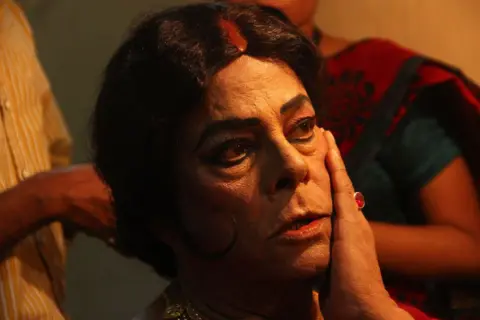
In mid-20th Century Bengal in eastern India, some of the biggest female stars on stage were actually men. Foremost among them was Chapal Bhaduri - better known as Chapal Rani - the reigning 'queen' of jatra, a travelling theatre tradition that once drew vast, fervent crowds. Male actors playing female roles were a familiar trope across global theatre, from Europe to Japan and China.In Bengal, the form flourished in jatra - a rural, open-air spectacle of music, myth, and melodrama that often rivaled cinema in reach, though not in rewards. Rooted in epic and devotional storytelling, it played out on all-sided stages, driven by heightened voice, gesture, and costume.In a new book, *Chapal Rani: The Last Queen of Bengal*, writer Sandip Roy traces Bhaduri's journey from stardom to obscurity - and, in doing so, captures a vanishing world where gender itself was an act.For decades, female roles in jatra were played by men known as purush ranis, or male queens. But even at its height, the form carried a certain stigma. Colonial-era urban elites in Calcutta often dismissed jatra as rustic or unsophisticated, leading to a gradual shift in audience preferences.Born in 1939 in north Kolkata to stage actress Prabha Devi, Bhaduri began acting at 16, adopting a girlish persona on stage. Over the years, he developed his craft, performing as queens, courtesans, and goddesses with a distinct grace, embodying femininity that was deeply felt and immersive.However, the changing societal landscape in the late 1960s saw the decline of male impersonation as women's participation in theatre grew. Bhaduri experienced this firsthand when he was booed off stage, signaling the end of an era.Despite the challenges, Bhaduri's story offers insights into the complexities of identity and artistic expression, emphasizing resilience amidst societal norms. Now residing in a retirement facility, his legacy prompts a reevaluation of how performers are remembered and the fluidity of gender in the arts. As society engages more openly with discussions on gender identities, Bhaduri's life stands as a testament to the rich, yet often overlooked narratives within Indian theatre.