The death of a nearly blind refugee from Myanmar, Nurul Amin Shah Alam, found dead on a Buffalo street in February, has been deemed a homicide. This tragic ruling comes after Shah Alam was abandoned by Border Patrol agents, who had left him at a doughnut shop on February 19. The Erie County Medical Examiner's Office concluded that his death resulted from complications due to a perforated duodenal ulcer, triggered by hypothermia and dehydration.
Despite the homicide ruling, the medical examiner did not specify who might be held responsible for Shah Alam's death. This ambiguity has raised concerns regarding the treatment of refugees and the responsibilities of law enforcement in such sensitive situations. Erie County Executive Mark Poloncarz expressed his condolences, stating, 'This should not have happened.'
The incident has drawn significant criticism from advocates calling for accountability, particularly concerning the actions of the Border Patrol agents involved. Murad Awawdeh, president of the New York Immigration Coalition, emphasized that Shah Alam sought safety in the U.S. and was instead left to die on the street. Awawdeh insists that those responsible must face consequences.
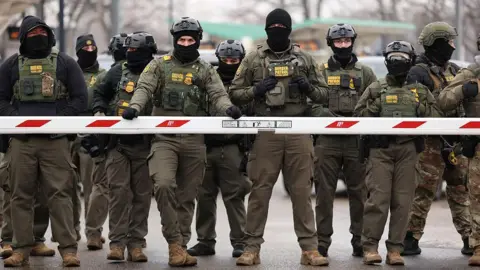
Leading immigration advocacy groups are pushing for a criminal investigation into the actions of the Border Patrol agents regarding Shah Alam's treatment. U.S. Customs and Border Protection defended its agents, stating that Shah Alam did not show signs of distress or mobility issues when he was dropped off, labeling their actions as proper.
However, reports reveal that Shah Alam's family had not been informed about his release from jail on the same day he was abandoned. Shah Alam, a member of the Rohingya ethnic minority from Myanmar, faced numerous challenges after fleeing his home country, where the Rohingya face severe discrimination and statelessness.
His journey led him to Malaysia for many years, where he worked in construction before arriving in the U.S. as a refugee with his family in December 2024. Following an incident with police, he spent nearly a year in Erie County jail before his release, which his family was unaware of.
Two days after being reported missing, Shah Alam's body was discovered near KeyBank Center, raising concerns about how he got there and when he died.