In brief
Despite ambitious entries like Look Mum No Computer's quirky song at Eurovision 2026, the UK concluded in last place with only one point. This marks a continuation of the UK's struggles in the contest, raising questions about future selections and strategies for success.
Another year, another flop. The UK has self-destructed at Eurovision all over again.
Look Mum No Computer, aka musician Sam Battle, got one solitary point, ending up in last place. It marks the third time we've been at the bottom of the table since 2020, with only one top 10 finish since 2010. This is the fourth consecutive year of analyzing our failure.
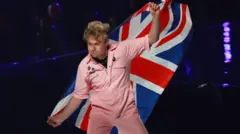
In the lead-up to the contest, hopes were low for Sam's synthesizer pop anthem, "Eins, Zwei, Drei," which featured him in a bright pink boiler suit energetically singing about quitting work to count to three in Germany.
Graham Norton noted it was “a big swing” but the performance left Europe bewildered. Juries awarded only one point, while the public gave it nothing. Journalists and fans expressed disappointment, feeling the UK has not been representative of its musical prowess, leading to a perception of the competition as a “poisoned chalice.”
Previous entries have played too safe, but this year, taking risks with an eccentricity, although applauded by some, did not resonate with voters. Critics argue that the BBC's reliance on less-established talent and novelty entries limits potential for success.
As the UK looks ahead to future competitions, the road to redemption requires reassessment of entry strategies, possibly learning from countries like Finland, which have embraced their uniqueness and transformed their Eurovision fate post-Lordi's win. With the right combination of elements—song, artist, and execution—the UK might just find its winning formula again.