In brief
This article delves into the evolving dynamics between China and Russia, highlighting their decades-long friendship, strategic partnerships, and economic dependency. With current global tensions, the relationship emerges as both a necessity for both nations and a source of underlying imbalance. As they continue to navigate their distinct approaches to global issues, their cooperation is crucial in the face of Western scrutiny and economic sanctions.
In a time of rapid geopolitical shifts, understanding the dynamics between China and Russia proves essential. Their relationship is often perceived through the lens of power politics—a partnership shaped by necessity and mutual benefit amid aspirations of influence.
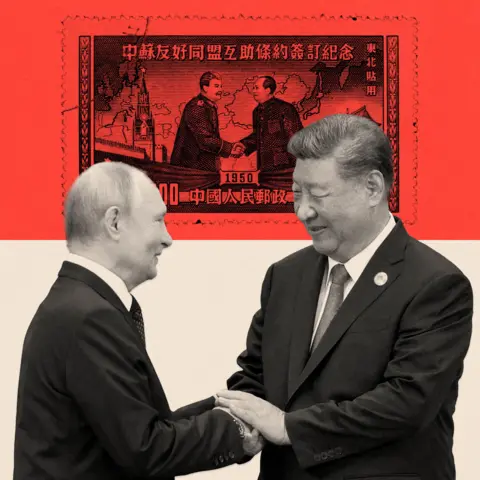
Notably, a revealing moment occurred last September as Presidents Xi Jinping and Vladimir Putin engaged in casual conversation at Tiananmen Square, discussing the potential for human organ transplants to prolong life—a metaphor for their quest for longevity in governance and partnership.
This relationship has matured over years, solidified by a shared vision of resisting Western dominance and enhancing economic ties. Currently, China stands as Russia's largest trading partner, while Russia is increasingly reliant on Chinese technology and resources due to sanctions imposed by the West.
However, this relationship is multifaceted. Despite descriptions of a 'friendship with no limits', analysts suggest that the imbalance in power dynamics—where China often dictates the terms of engagement—poses risks for Russia's sovereignty as it finds itself more embedded in Chinese economic interests.
Such complexities resonate throughout their cooperation, which, at its core, includes military dependencies, energy agreements, and a unified stance against U.S. foreign policy. Yet both nations maintain a cautious distance, not formalizing their alliance but rather embracing a flexible partnership that adapts to changing circumstances.
The intertwined fates of China and Russia are becoming increasingly apparent, be it through economic partnerships or their shared geopolitical ambitions. While their political camaraderie is emphasized at state levels, cultural and societal connections appear less robust, marked by a continuing preference of citizens to engage with the West.
As the international landscape evolves and external pressures mount, both China and Russia must address the underlying vulnerabilities in their significant partnership. Their shared journey, supportive yet cautious, reflects a complex relationship that navigates a path between dependence and autonomy.