In brief
Ireland, once a Eurovision powerhouse, will not participate in this year's contest due to a boycott alongside Iceland and Spain, prompted by Israel's involvement amid the conflict in Gaza. Local perspectives reflect both support and opposition to the cultural boycott, highlighting deep divisions within Irish society regarding the issue.
From Johnny Logan and Dana to years of dominance in the early 1990s, Ireland has a storied history with the Eurovision Song Contest.
Ordinarily the country, which holds the joint record for most wins with Sweden, would join the rest of Europe in eagerly awaiting Saturday's grand final.
But not this year.
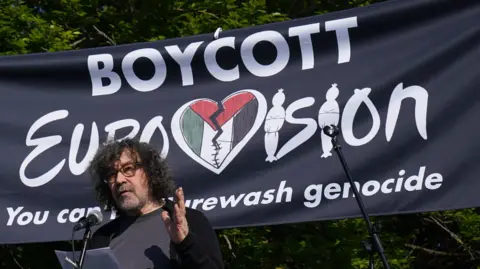
Ireland is one of five countries, including Iceland, the Netherlands, Slovenia, and Spain, boycotting the contest over the European Broadcasting Union's (EBU) decision to allow Israel to participate.
The competition features no Irish entrant, and national broadcaster RTÉ will not be airing events from Austria, opting instead for a Eurovision-themed episode of the sitcom Father Ted.
This protest is part of a broader wave of discontent in Ireland regarding its relationship with Israel amidst the ongoing conflict in Gaza, positioning the country as one of the most pro-Palestine nations in Europe.
Critics, including the Israeli broadcaster Kan, have described the absence of these countries as a cultural boycott, warning it could harm freedom of expression.
Public opinion in Dublin shows significant support for the boycott among young people. Some expressed that no countries should participate, while others felt Ireland’s stance was commendable.
On the other hand, voices within the Irish Jewish community, such as Oliver Sears, have condemned the boycott as collective punishment and voiced concerns of increased antisemitism in Ireland.
As Eurovision approaches, the tension surrounding this year's contest mirrors the larger geopolitical issues at play, with various opinions reflecting Ireland’s complex relationship with Israel.