In brief
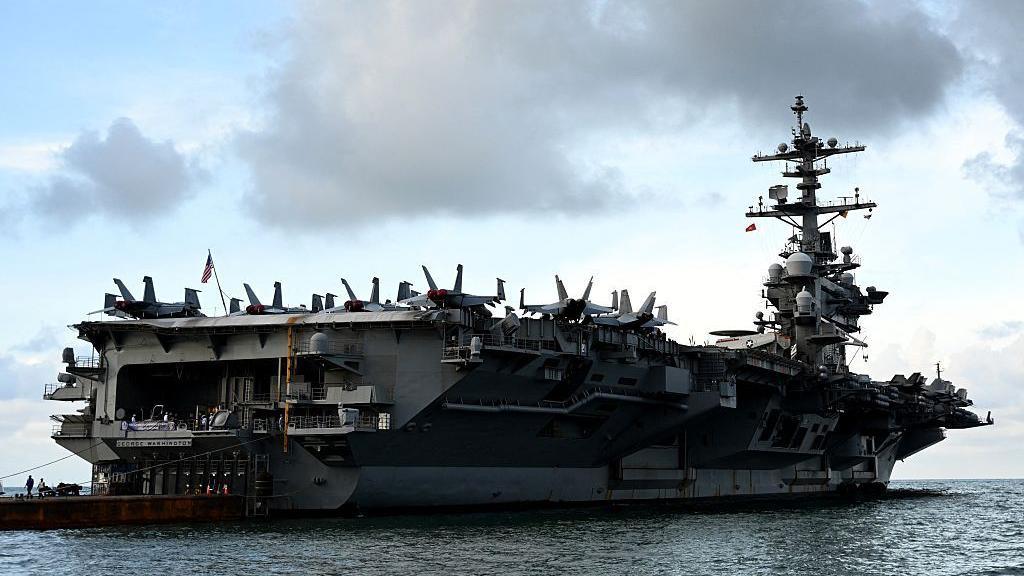
The U.S. Navy’s newest aircraft carrier, the USS George Washington, is en route to the Middle East to relieve the USS Abraham Lincoln after reports of food shortages, broken plumbing, and sailors reportedly attempting to jump overboard. The Lincoln has been at sea since December, far beyond its usual six‑month deployment, raising alarm among families and lawmakers. President Trump denied any crisis, while the Navy acknowledged supply disruptions linked to regional conflict. The Washington is expected to arrive in early September, becoming the third U.S. carrier in the area while the Navy signals a shift from the Pacific.
USS George Washington sails to relieve Lincoln amid crew crisis
The U.S. Navy’s newest aircraft carrier, the USS George Washington, is steaming south from Yokosuka, Japan, to stand in for the USS Abraham Lincoln after the latter’s nine‑month deployment was marked by alarming conditions.
Reports from family members of sailors aboard the Lincoln describe food shortages, faulty plumbing, long periods without port visits, and a surge in mental‑health concerns—some crew even attempted to jump overboard. The ship’s 5,000‑person crew has been at sea since 11 December, far longer than the typical six‑month cycle. The situation has drawn criticism from Democratic lawmakers, who are demanding a review of how the Navy sustains its carrier force amid the current geopolitical tempo.
President Donald Trump dismissed worries about the ship’s welfare, claiming the deployment was “not nearly long enough,” while the Navy said supply disruption stemmed from combat actions against Iran. The Washington, which left the U.S. base in May, is expected to arrive in Duqm Port, Oman, in about nine days and become the third carrier in the region along with the USS George H. W. Bush. This movement also shifts the U.S. naval presence from the Pacific, signalling a strategic recalibration.
Indigenous coastal communities that depend on the regional marine ecosystem are watching the deployment closely. Marine resource usage, rapid port expansion and military logistics can impact traditional fisheries and the cultural practices tied to these waters. As the Navy moves forward, it remains crucial to coordinate with local and indigenous stakeholders to mitigate environmental and cultural disruptions.