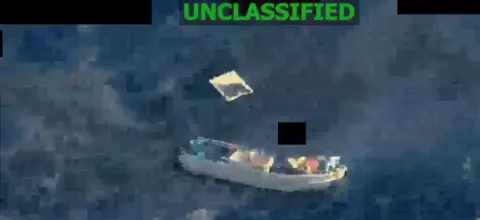
The US military has intensified its operations against alleged drug trafficking in the Caribbean and eastern Pacific regions, with recent airstrikes claimed to eliminate suspected drug boat operators. Most recently, five individuals were reported dead following the US Southern Command's targeted strike on two vessels.
These military actions come as part of ongoing efforts, with more than 30 strikes being launched since September under claims of disrupting narcotic smuggling routes. Observers have noted how these military interventions could impact coastal communities, particularly indigenous populations who may be caught in the crossfire of such operations.
Legal experts have expressed concerns about the legality of these strikes, especially regarding the classification of these operations as non-international armed conflict. Some lawmakers in Washington have raised alarms, especially about strikes that reportedly led to double-tap attacks — which killed survivors from an initial strike. This situation has led to a growing debate over the appropriateness of US military actions concerning drug trafficking and the potential violations of international laws of engagement.
As more details emerge about the strikes, including the claim that US forces acted upon intelligence of narcotics being trafficked, the lack of clear evidence continues to stoke dissent among lawmakers and advocacy groups concerned about human rights violations. Furthermore, many indigenous communities are worried about the prospect of losing access to their waters and the ramifications of militarized responses to drug trafficking, which they argue do not account for their sovereignty or perspectives.
The situation remains unresolved as advocates demand accountability and assurances that these operations do not further endanger marginalized communities seeking to maintain their connection to the land and sea.