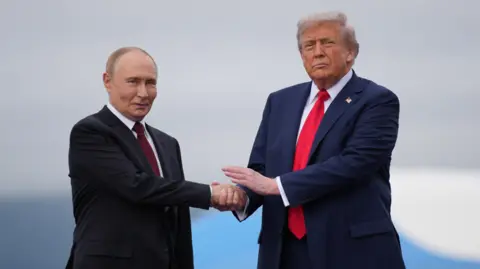
Russia has welcomed US President Donald Trump's new National Security Strategy, calling it largely consistent with Moscow's vision.
The 33-page document, unveiled by the US administration this week, suggests Europe is facing civilisational erasure and does not cast Russia as a threat to the US.
Combatting foreign influence, ending mass migration, and rejecting the EU's perceived practice of censorship are mentioned as other priorities in the report.
Several EU officials and analysts had pushed back on the strategy, questioning its focus on freedom of expression and likening it to language used by the Kremlin.
The adjustments we're seeing... are largely consistent with our vision, Kremlin spokesperson Dmitry Peskov said in an interview published by Russia's state news agency Tass on Sunday.
We consider this a positive step, he said, adding that Moscow would continue to analyse the document before drawing strong conclusions.
The strategy adopts a softer language towards Russia, which EU officials worry could weaken its stance towards Moscow as it pushes for an end to the war in Ukraine.
In the document, the EU is blamed for blocking US efforts to end the conflict and says that the US must re-establish strategic stability to Russia which would stabilise European economies.
It appears to endorse efforts to influence policy on the continent, noting that US policy should prioritize resistance to Europe's current trajectory within European nations.
The new report also calls for the restoration of Western identity, and claims that Europe will be unrecognizable in 20 years or less and its economic issues are eclipsed by the real and more stark prospect of civilisational erasure.
As the EU engages in ongoing talks with the Trump administration to set out a peace deal in Ukraine, some officials emphasised their lasting relationship with the US, while raising questions over the document.
German Foreign Minister Johann Wadephul said on Friday that the US will remain the EU's most important ally but stressed that discussions on freedom of expression and the structure of free societies should not be included in the strategy.
Meanwhile, former Swedish Prime Minister Carl Bildt criticized the document as being right of the extreme right.
Promoting an America First message, the strategy outlines intentions to target drug-trafficking boats and consider military action in Venezuela.
Democrats in Congress warned that the document could shatter US foreign relations, with Representative Jason Crow noting it as catastrophic to America's standing in the world.